


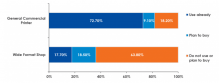
Managing the diversity of work possible within a wide-format shop is challenging.

Since Sales is so crucial to a business’ existence, it is puzzling why so many small businesses do not use CRM.

Print MIS systems can be the path to reduce order errors, keeping workflow on track and identifying problems early in production, and moving towards more automation. But just adding a Print MIS is not enough. To reap the benefits of a Print MIS there must be a commitment to setting up the system, identifying information collection points, and keeping the system up-to-date as new software is added to the workflow and new equipment is added to the capabilities set.

It's time to ask the question that is often missed in discussions about workflow — is the current workflow scalable? Scalable isn’t only a question of getting bigger; it is also a question of complexity. If your workflow was built to handle one type of job, like books or bills or bingo cards, and today you are handling magazines, direct marketing mailers and posters, there may be a mismatch between your work and your workflow.

The team behind ESKOWorld, the North American user conference for users of ESKO packaging, printing and finishing solutions, with the help of their customer advisory council, created a well thought out agenda that addressed the needs of over 500 users and 100 brand owners and agencies.
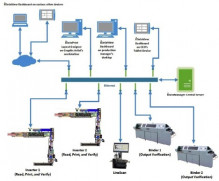
How important is data in digital finishing? It’s critical. You’re probably relating this to the fact that digital is (by its file-based nature) all about variable data. But beyond creating personalized documents and books, there is the larger question of integrating production data into the plant workflow and MIS systems.

The fifth annual installment of the Inkjet Summit recently took place in Ponte Vedra Beach, Fla. I have been lucky enough to attend all five Summits, and once again, it did not disappoint. Each year, approximately 100 printing company owners and senior-level operations and sales executives attend this invitation-only event.

In another series of workflow blogs we have been walking through the path of auditing the current workflow in your environment and identifying ways to optimize through automation. It’s a long story that has been unfolding over many months. Along the way, many have asked specific questions about some of the fine points of automation and what tools would be on the “must review” list.
I've been in the industry long enough to have witnessed a small parade of attempts to develop universal print-and-finishing interfaces. In the 90’s, there was an effort to develop a common interface among inkjet printers being used on offset finishing lines. In 1999, a much more ambitious effort by the CIP4 consortium led to JDF (Job Definition Format) ... So, where are we now?

I recently interviewed a commercial printer with over 70 active online portals servicing tens of thousands of end users, delivering hundreds of jobs per day, and driving 65% of their digital business. Brian Losch, VP of sales, shared some of what they learned on the way.
