


Target Report: Batman is Trapped Inside a Warehouse

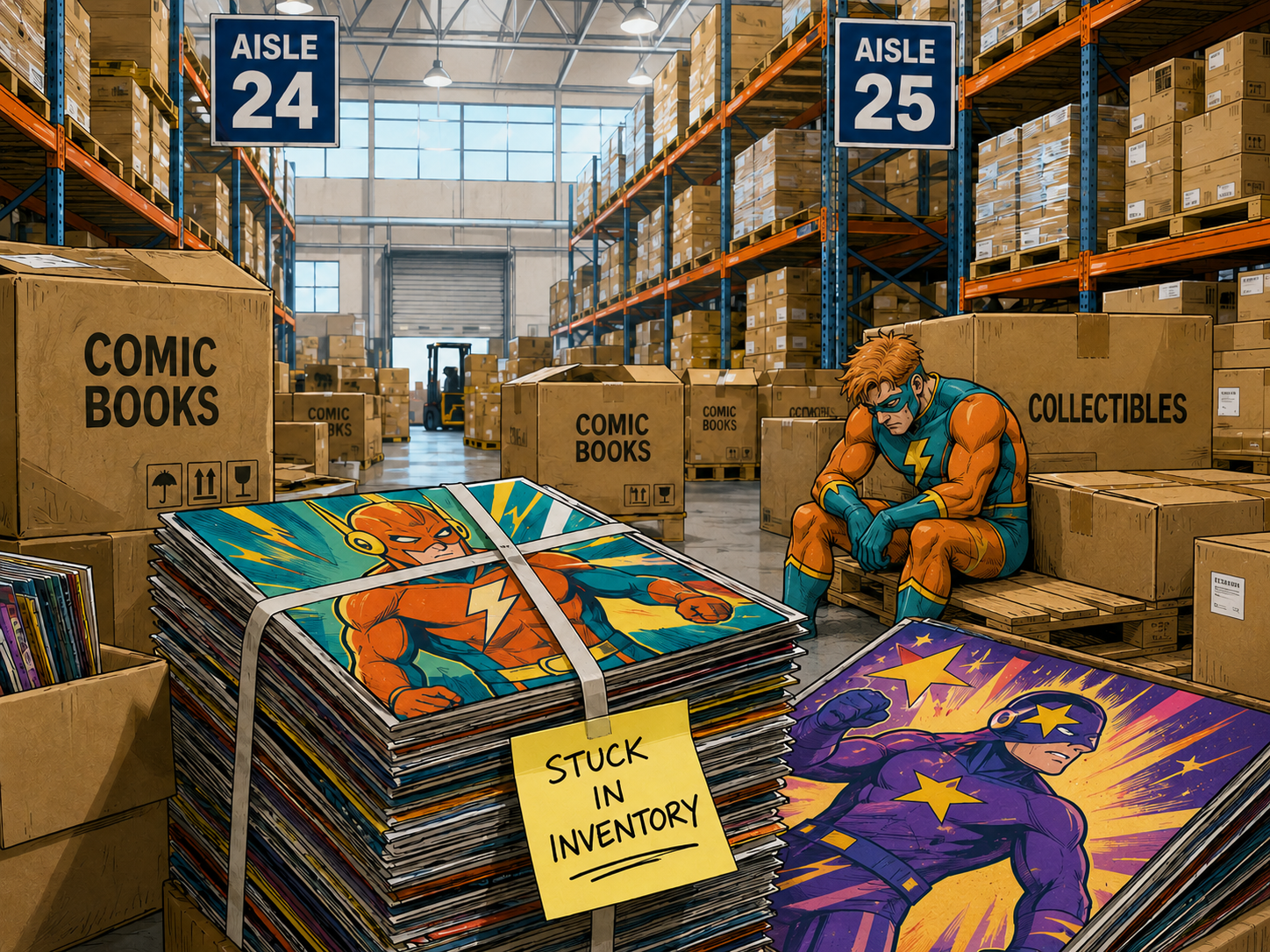 Somewhere in a Mississippi warehouse, Batman is waiting for a bankruptcy judge.
He is not alone. Millions of comic books, graphic novels, games, figurines, and collectibles tied to the collapse of Diamond Comic Distributors are reportedly caught in a dispute among JPMorgan Chase, publishers, creditors, a landlord, and the bankruptcy estate. For comic book fans, the image is irresistible: superheroes, villains, and entire imagined universes boxed up and immobilized, not by kryptonite or a master criminal, but by secured lending, consignment claims, and warehouse liens.
For the printing industry, the story is more than a curiosity from the comic book business. It is a reminder that printed products do not become revenue when ink hits paper, and the signatures get stitched and trimmed. Printed products become revenue when the product moves, reaches the customer, and gets paid for. This simple flow from order to revenue becomes even more complicated when the product is a publication or other finished goods inventory in the printing industry.
There is another lesson unfolding as well: the Diamond case may influence how suppliers use consignment arrangements in the printing industry.
The Decline of Diamond's Comic Book Business
Diamond was not a printer. As the name implies, the company was a distributor, essentially a middleman, but one that once held a dominant spot in the comic book business. For decades, Diamond was the most important channel through which printed comic books and related products moved from publishers to retailers. Through a series of missteps, the company lost exclusive contracts with DC Comics and Marvel Comics, among others. Diamond’s hold on the channel weakened and crumbled. Eventually, the high fixed costs associated with about one million square feet of warehouse space, freight infrastructure, and labor costs led Diamond to file for protection under the courts in a Chapter 11 bankruptcy.
JPMorgan stepped in with a $41 million Chapter 11 loan, with repayment expected from the sale of Diamond’s business. The sale process fell apart amid charges that Diamond was withholding information related to the distribution deal for Magic: The Gathering. JPMorgan was eventually unwilling to continue funding the company, and Diamond moved its bankruptcy to a Chapter 7 liquidation.
As the process deteriorated, the inventory, approximately 8.2 million comic books, graphic novels, figurines, and table-top games, became hostage and is now stuck in a 600,000 square-foot warehouse in Mississippi. In addition to Batman, there are others locked in limbo. James Bond, Doctor Who, Garfield, Spider-Man, Mickey Mouse, Donald Duck, and the Power Rangers, among others, are stuck while the parties to the bankruptcy fight over a simple question: who owns all this stuff?
Publishers have taken the position that they supplied the products on consignment and never transferred ownership to Diamond. Therefore, their respective inventory should just be returned to them. JPMorgan, reportedly still owed approximately $7 million, has argued that its senior secured position gives it priority over the publishers’ consignment claims. The bankruptcy estate wants to sell the inventory to pay off debt, at least to the extent it can. The landlord has raised the possibility that it may have a lien on the inventory for past due rent. The bankruptcy court is adjudicating the dispute.
When Consigned Supplies Are on the Printer's Floor
Consignment is a common and useful practice in the printing industry. Paper merchants, plate suppliers, ink companies, chemistry providers, toner suppliers, and other vendors often place inventory inside a printer’s facility. The understanding is usually straightforward: the supplier owns the product until the printer pulls it from stock, uses it in production, or otherwise triggers payment. For the printer, the arrangement reduces working capital needs and helps ensure the availability of materials. For the supplier, it keeps products close to the customer and strengthens the relationship.
That arrangement works well while the printing company is operating normally. The questions begin when the printer closes, defaults, enters receivership, files bankruptcy, or is sold in a distressed “tuck-in” transaction. At that point, everyone may have a different view of the same skid of paper, box of plates, or tote of ink. The supplier may say the goods are consigned and still belong to the supplier. The printer’s lender may say all inventory in the plant is collateral under its blanket lien. A bankruptcy trustee, receiver, or fiduciary agent may ask whether the supplier properly documented and perfected its interest. A buyer of the failed business may ask whether the inventory and supplies in the building are included in the sale. The answer may depend less on industry customs than on contracts, filings, notices, records, and the ability to identify the goods.
The Diamond case puts that issue in plain view. Publishers reportedly placed product with Diamond under consignment arrangements. When Diamond failed, those publishers expected to recover their comic books and other items, or to be paid from the proceeds of the sale of what they presumed was their property. The inventory may have been physically held and controlled by Diamond, but was, at least in the publishers’ view, economically owned by them.
Consolidation continues apace in the printing and packaging industries, with plant closures and related tuck-in transactions especially prevalent in the commercial printing segment. The question of who owns supplies or inventory placed in a plant on consignment may be impacted by the eventual decision in the Diamond Comic Distributors bankruptcy case.
If a printer shuts down with supplier-owned material on the floor, several questions arise immediately. Was the consignment agreement in writing? Did it clearly state when title transfers? Were the materials segregated from the printer’s owned inventory? Were they labeled, tracked, and reconciled? Did the supplier file a UCC financing statement if required? Did it notify the printer’s existing inventory lender? Was the product consumed before the shutdown, and if so, when did payment become due? Can the supplier enter the closed facility to remove the goods, or must it first obtain permission from a receiver, trustee, lender, landlord, or court? These are not abstract legal points. They affect cash, collateral, and transaction value.
In an ordinary sale of a healthy printing company, consigned inventory may be treated as a routine working-capital matter. In a distressed sale, it can become a contested issue. Buyers want clean title to the assets they acquire. Lenders want to know what collateral supports their loan. Suppliers want to avoid becoming unsecured creditors for goods they believed they still owned. Sellers and advisors need to know whether the inventory shown on the floor is actually owned by the company.
The practical consequence of the Diamond case may be a change in supplier behavior. If the Diamond dispute produces rulings or settlements that leave consignors exposed, suppliers to the printing industry may tighten their procedures. We may see more UCC filings, more lender notices, more detailed consignment agreements, more frequent inventory audits, tighter credit limits, shorter billing triggers, and less willingness to leave valuable supplies at customer locations without stronger documentation.
Why This Matters in a Sale or Restructuring
Printers may also see more scrutiny from their lenders. A bank that lends against inventory will want to know whether materials in the building are owned by the borrower or by suppliers. The difference matters when calculating borrowing availability and recovery value. A plant full of paper may appear asset-rich until the lender learns that much of the paper is subject to consignment claims.
For owners considering a sale, an acquisition, a refinancing, or a workout, the lesson is clear. The distinction between owned inventory, customer-owned inventory, supplier-owned inventory, and consigned inventory should be clear before a crisis occurs.
Batman's Fate
Batman may eventually escape the warehouse. The larger issue will remain. In the printing industry, raw material inputs and finished goods often sit at the intersection of manufacturing, distribution, credit, and secured lending. When business is good, those relationships can appear seamless. When a company fails, the seams and cracks show.
The Diamond bankruptcy is a comic book story only on the surface. Underneath, it is a print-channel story and a consignment story. It reminds publishers that printed products do not become revenue until they are shipped and paid for. It reminds suppliers that ownership may not protect them unless it is properly documented and enforceable. And it reminds printers, lenders, and buyers that what is sitting on the floor may not be as simple as it looks.
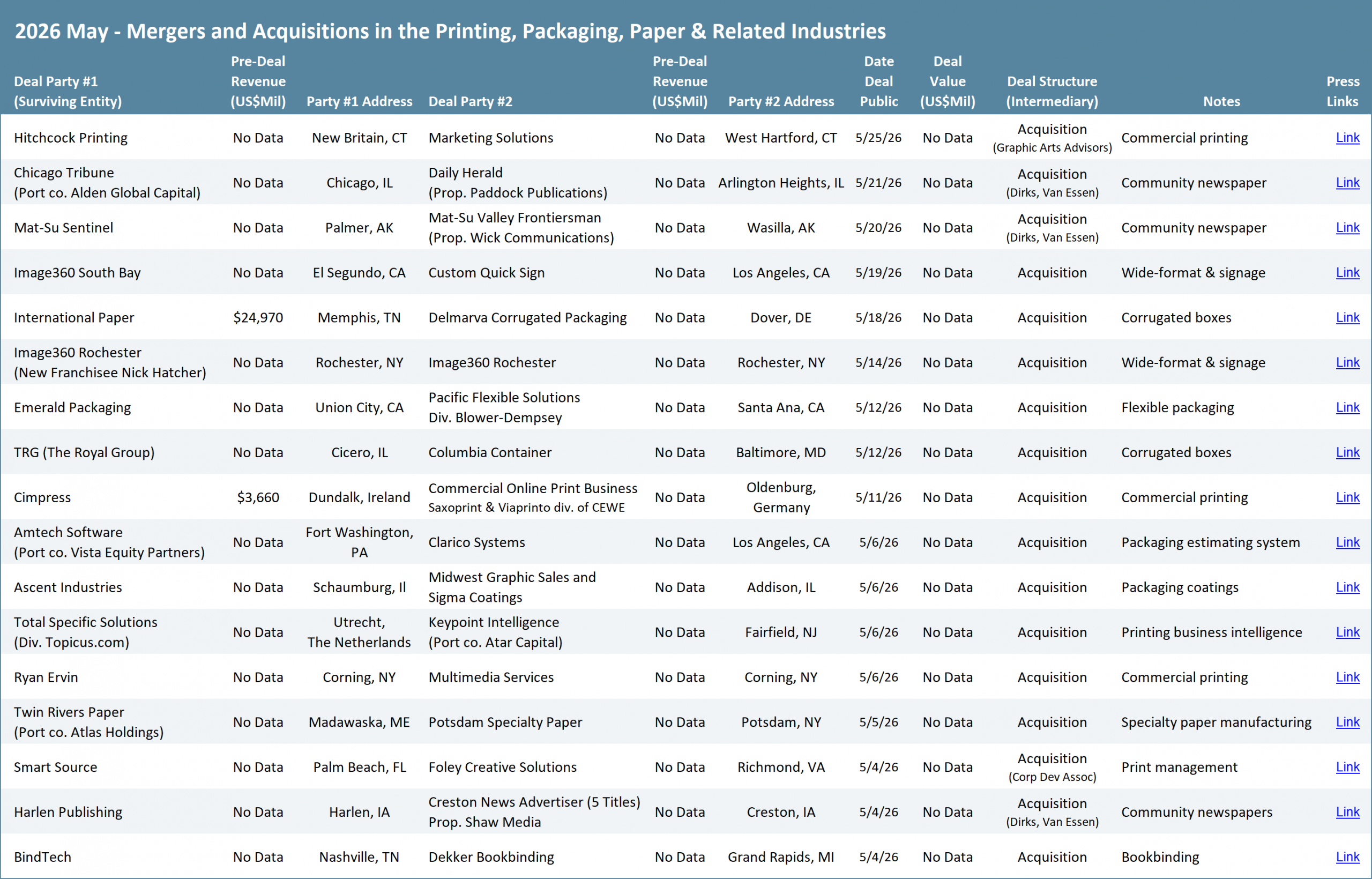
Click to enlarge.
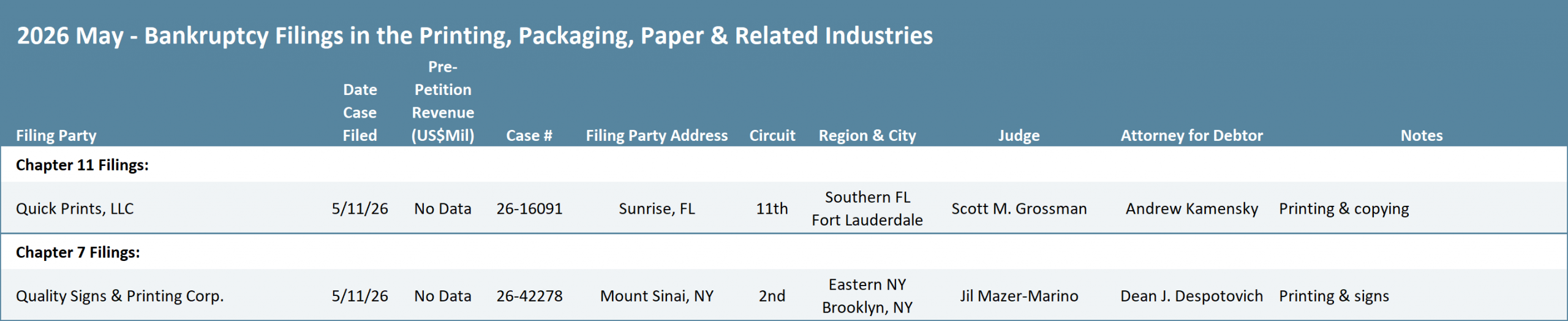
Click to enlarge.

Click to enlarge.
View The Target Report online, complete with deal logs and source links for May 2026
For more information on Graphic Arts Advisors, visit graphicartsadvisors.com
- Categories:
- Business Management - M&A
Mark Hahn is a managing director and founder of Graphic Arts Advisors, a boutique strategic financial advisory and consulting firm focused exclusively on the printing, packaging, mailing, marketing services, brand management, and related graphic communications industries. With more than 35 years of graphic communications experience in the areas of finance, operations, sales, M&A, and general management, Hahn has served as chief financial officer, chief operating officer and other senior positions with several commercial printing companies, as well as founding and eventually selling his own printing company.The firm assists company owners and management, as well as their lenders, investors and shareholders in the following areas: mergers and acquisitions, sale of business, strategic and financial advisory, capital structure and funding, financial analysis, interim and turnaround C-level management, business valuations and serving as consulting experts. Hahn is the author of The Target Report and is regularly published and quoted in printing industry trade and management journals. Mark Hahn can be reached at (973) 588-7399 or mark@graphicartsadvisors.com


