


I've written more than once on the rapid evolution of finishing, which is being driven by the equally rapid adoption of inkjet web printing. Inline web finishing was always something of a "black art" in the offset web world. Since high-speed offset web presses don't print at the push of a button, performing complex finishing operations inline with the web press took a lot of engineering expertise.
Back in the day, the bindery (and finishing in general) was a fairly distinct environment, with some established processes and workflows that had not changed in many decades, (or longer!). This continued to be the case up until several years ago, when high-speed continuous inkjet presses began to take off.
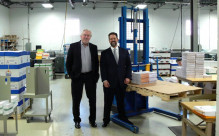
Steve Johnson, founder and owner of Copresco, is a bit of a legend in the digital book business.
Tell me your thoughts and concerns for your finishing operation, and I’ll summarize them all for my follow-up column next week!
Digital printer vendors have something of a natural preference for running their presses in "print only" mode with nothing extra attached to potentially gum up the works. But the very nature of continuous inkjet (no plates, very short back-to-back runs) argues strongly for integrating finishing so that a complete product can come out the end with little labor involved.
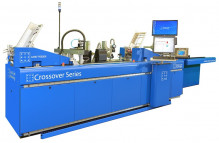
Did you know there are over three BILLION gift and membership cards mailed out every year?

Designers and printers are pushing the proverbial envelope with laser diecutting, realizing breathtaking results in the process.
In the “old days,” runs were in the millions of copies and machines could run continuously for days.
The work-in-progress workflow in commercial printing has evolved over decades and is now fairly well defined. On the digital side, things are still in a bit of a flux. High-volume digital printing (mainly inkjet) has expanded so rapidly that the finishing component has had to sprint to keep up.
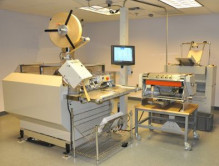
Today's book printers and binders have created small modular work cells which can change case, cover, and book block sizes in minutes. But there aren't a whole lot of master bookbinders floating around in the marketplace right now, so another challenge is getting workers to produce high-quality hardcovers without having the benefit of a long training course or apprenticeship. Enter GP2 Technologies.
