


The Brand-Building Power of Packaging


Walk any retail aisle and witness the silent sales force at work: Printed labels and packaging signaling value to shoppers. These same packages strengthen an equally critical bond between brands and their label and packaging suppliers. Each flawlessly executed package serves as the first and continuing tangible proof of a converter’s capabilities, demonstrating reliability when the stakes are highest.
This dual proof of value positions packaging as the label and package printer’s most powerful business development tool, as it builds trust. And as Michael Agness, executive vice president, Americas, at Hybrid Software USA (Booth 3610), says: “People buy from people they trust.”
Yet trust remains fragile. Agness illustrates with a consumer-level metaphor relatable to anyone with a sweet tooth. “If you had a bag of plain M&M’s and it was discolored from the rest of the M&M’s,” he asks, “would you ever pick that up and consume that bag? The answer is no.” Minor color drift breaks both consumer confidence and converter relationships. When print control and finishing discipline maintain brand integrity across SKUs and substrates, every package handled, shipped, and stocked reinforces a print service provider’s value proposition.
Agness’ message is clear: treat every shelf-ready element — graphics, coatings, embellishments, barcode readability, QR functionality — as evidence of your reliability. This systematic excellence transforms packaging from project work into partnerships, moving converters from vendor lists to trusted adviser status. But do it quickly.
Fast & Fabulous
Brands recognize that when a flavor profile trends on social media or a limited-edition product gains traction, they must scale up immediately or risk missing the opportunity entirely. This is why Jan De Roeck, marketing director at Esko (Booth 2010), frames speed from idea to shelf as the difference between a product or brand idea and a real program. Converters that enable brands to pivot rapidly from pilot to national rollout become indispensable partners.
But how can converters achieve schedule compression when late design revisions, approval loops, and last-minute regulatory updates create bottlenecks? De Roeck says smart converters work with brands to address these systematically: establishing content control protocols for ingredient tables and compliance symbols, formalizing approval hierarchies, and creating firm boundaries around revision windows.
The payoff for these efforts, he explains, will be outsized. Fewer resubmissions mean smoother operations. Predictable timelines build confidence. Most importantly, a reputation for reliable, rapid response keeps a converter in the room when brands plan their next launch.
To Make Complicated Things Simple
Paul Edwards, vice president of the digital division at INX International (Booth 2676), encourages converters to demonstrate capabilities for label and packaging applications, attracting the most investment. This means targeting applications where versioning, personalization, or rapid iteration create clear value.
Of course, converters will also need to build infrastructure and integrated workflows to ensure more complex or high-touch printing jobs retain profitable margins. Edwards encourages converters to look to technology to maintain those margins.
After all, automation transforms conventional print economics. Automated setup routines, closed-loop color control, in-line inspection systems, and rapid changeover capabilities make flexo, offset, and gravure viable for shorter runs. Edwards, of course, also recommends converters look at digital and hybrid printing.
Digital handles image variability and quick pivots with aplomb, which can be essential for packaged goods markets such as craft beer and artisanal foods. Edwards notes brands in these markets also “really care about brand awareness and identification,” which drives their willingness to embrace quick tests of innovative ideas. These jobs can then become low-risk pilots to create the proof of concept converters needed to scale new ideas for longer runs.
The consumer environment rewards this flexibility from both converters and brands. Regionalized campaigns, seasonal windows that demand next-week delivery, and retailer-specific requirements all become profitable opportunities rather than problems to avoid. Speed becomes revenue, and revenue builds loyalty.
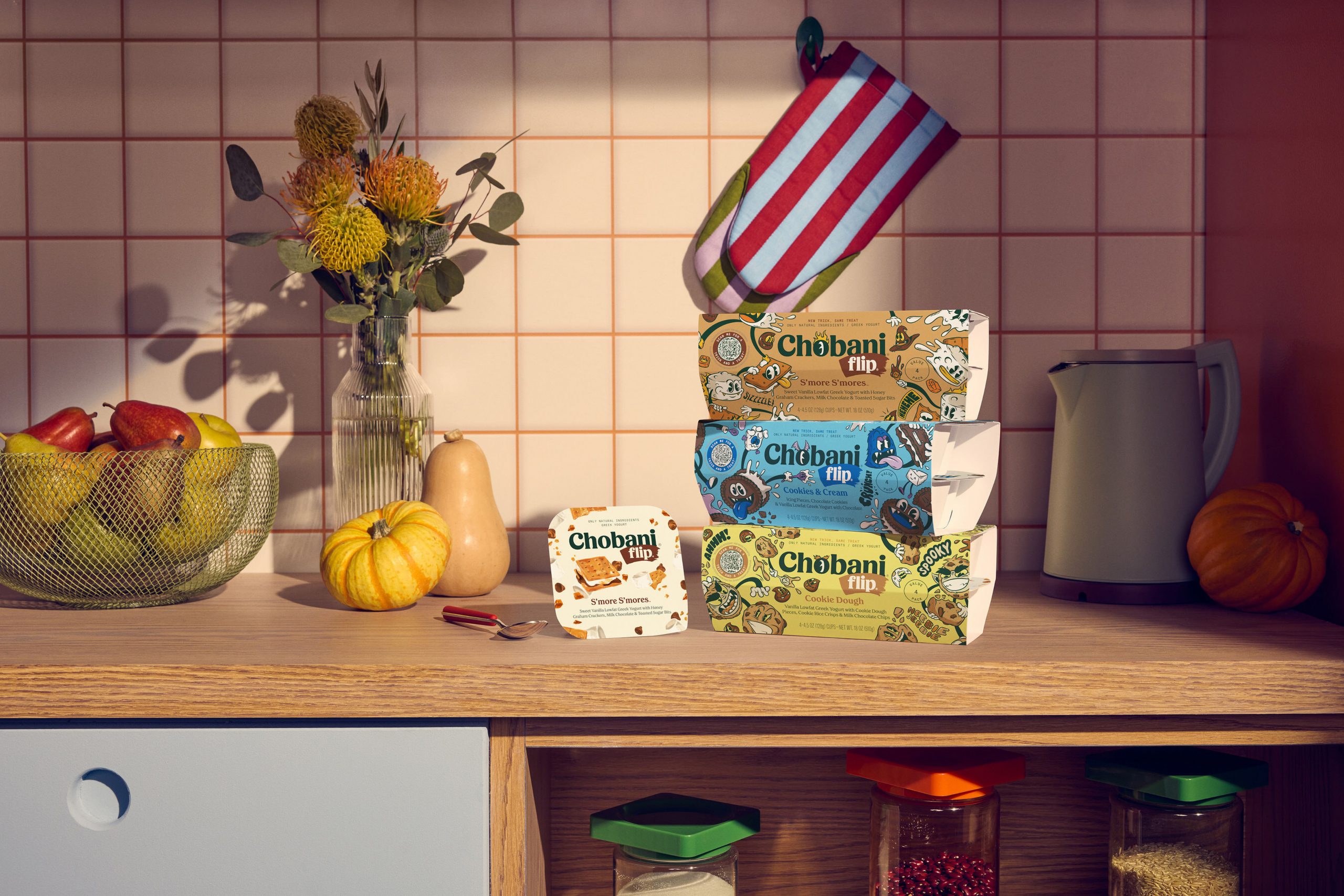
← Featuring Halloween-themed overwraps and scannable QR codes that unlock augmented reality trick-or-treat adventures, these Chobani Flip packages serve as tangible proof of the value of printed packaging — elevating PSPs to marketing counterparts versus commodity suppliers. | Credit: Chobani
Siren Songs of Embellishments
This speed is not only critical in the printing of labels and packages, but also in the finishing of them. As April Lytle, global brand innovation manager at Scodix (Booth 5424), notes, the economics of short runs, the responsiveness demanded by social-driven launches, and the rise of subscription and VIP unboxing experiences point to a broader role for digitally applied texture and foil.
Just don’t call embellishment decoration. Understand that when a package with premium finishing communicates, it sings a captivating siren song. When light catches an embossed logo or fingers discover unexpected texture, the package conveys quality before words are read. In categories where purchase decisions happen in seconds, these sensory cues drive selection.
Traditionally, highly embellished packages, especially on short-run jobs, carried substantial manufacturing and time costs. But, Lytle argues, digital embellishment has revolutionized those economics. By eliminating plates and setup time, converters can deliver tactile varnish and foil for a broader range of packaged goods.
Converters can realize even more opportunities to sell more high-value labels and packaging when they focus their sales and marketing efforts on demonstrating how finishing drives measurable results, increased shelf attention, accelerated approval cycles, and faster market entries. When digital embellishment enables converters to produce finished proofs on production substrates instead of CMYK mockups, it also empowers brand teams to make confident decisions quickly, thereby compressing the time from ideation to market for a packaged product.
When the sales conversation turns to sustainability, Lytle advocates for informed dialogue. Some printed packaging buyers equate minimal design with environmental responsibility, she admits, but modern materials and processes have evolved significantly. Lytle encourages converters to share actual life cycle assessments of the impact of embellishments before ruling them out in a package development project.
Spectacular shelf presence can coexist with environmental stewardship, she contends, when converters understand the options.
When pressed, Lytle admits that making this embellishment excellence repeatable requires systematic approaches. But premium packaging need not become rocky isles for converters. Consider implementing the following process improvements: incorporate finishing specifications into concept templates, standardize proven tactile and foil combinations by substrate type, build category-specific sample libraries for client presentations, and align quality control with actual shelf conditions, accounting for viewing angle, retail lighting, and tactile interaction.
(With) Stand and Deliver
Beautiful packaging can’t be appreciated if it can’t survive the journey from manufacturer to distribution center to retail store. And as Jim Garvey, vice president of coatings at INX International, explains, buyers return to converters that consistently protect brand appearance and functionality from production through point of sale.
This is why converters should treat coating selection as a strategic spec. Build specification gates into your workflow so coating selections are locked in early: confirm substrate-coating fit, define cure expectations, and test critical postpress interactions on the actual production stock.
Coating selection demands strategic thinking. Multiple variables, including substrate characteristics, ink systems, downstream finishing, adhesive requirements, and converting processes, must align. Confirm substrate-coating compatibility, establish cure parameters, and validate all postpress operations, including lamination, cold foil application, and label adhesion, using actual production materials. Consider how coatings will impact the scannability of QR and barcodes, especially under retail lighting.
Understand the requirements, but celebrate the positives of coatings. In specific applications, high-performance coatings eliminate lamination requirements, reducing material costs, processing steps, and package weight while maintaining required protection. Even when lamination remains optimal, this consultative approach positions a converter as a strategic partner seeking cost-effective solutions.
From Supplier to Strategic Partner
Packaging remains the ultimate proof of value, simultaneously winning consumers for brands and securing long-term relationships between brands and converters. Trust grows through consistent delivery — maintaining speed, color fidelity, and finishing excellence across every impression. When converters make this proof repeatable and scalable, they become strategic partners integral to a brand’s success.
For PRINTING United Expo attendees exploring the latest technologies and techniques, remember that equipment and capabilities are just the beginning. The converters that thrive will be those that transform these tools into systematic advantages, building trust through predictable excellence.
- Categories:
- Business Management - Industry Trends


