


From AI to B2: How Printers Will Stay Competitive

Chris Wells, president of the thINK board of directors (and EVP of DSG|UW in Canton, MA), took the stage on opening night of the 12th annual thINK Ahead conference to praise attendees and their positive mindsets.
“Winners spend all their time thinking about winning,” he said. “Losers spend all their time thinking about winners. Welcome to the conference of winners.”
This “conference of winners” came together for a beautiful and sunny week in Boca Raton, FL, for the event, which is an independent community of Canon production inkjet customers, solution partners, and printing industry experts. While every year the thINK conference leaves attendees with fresh ideas to take home to their businesses, this year had the added excitement of coinciding with the U.S. unveiling of the new Canon varioPRESS iV7 B2+ format sheetfed inkjet press at Canon’s Customer Innovation Center (CIC).
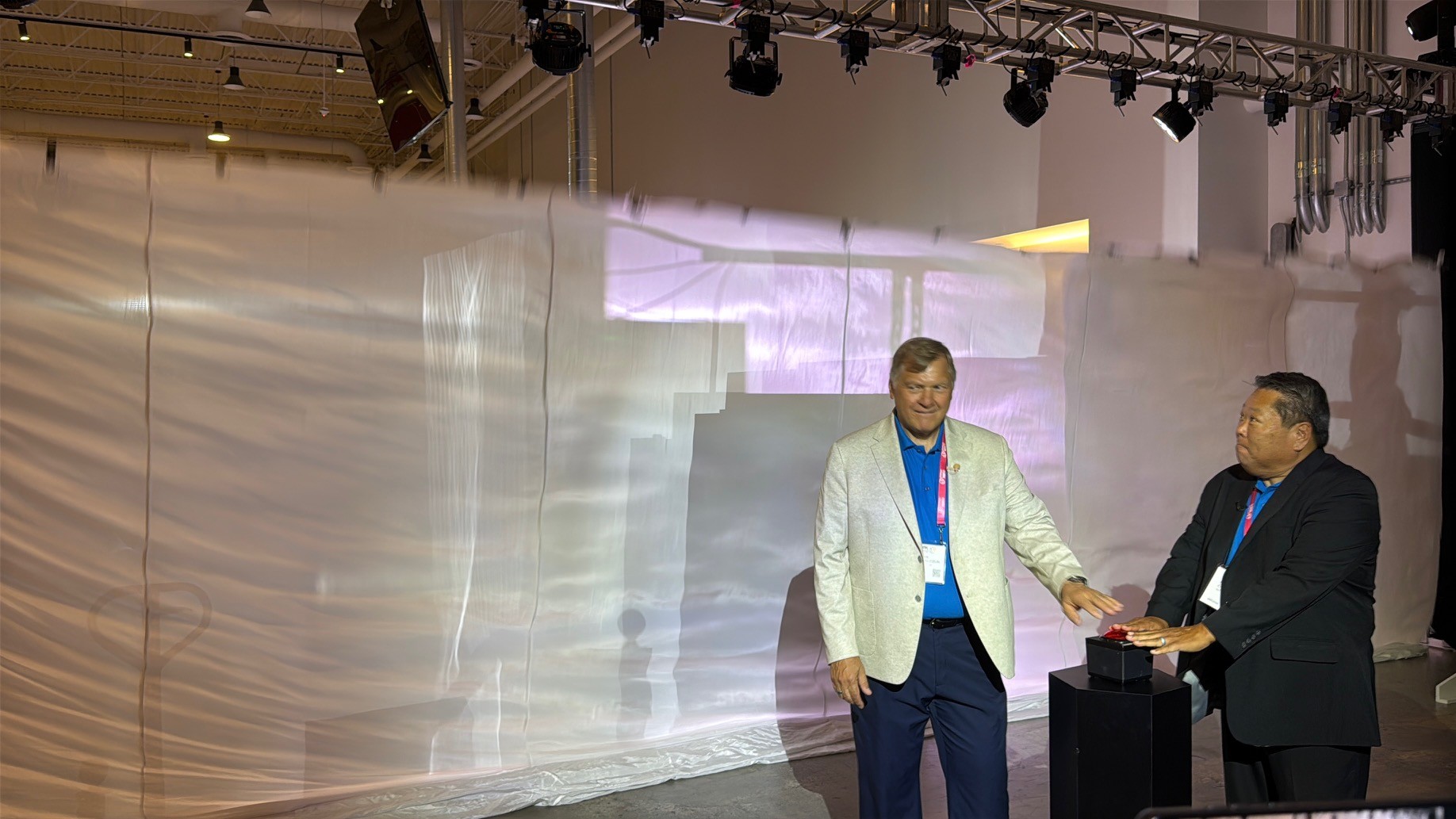
Pete Kowalczuk, executive vice president of Canon USA (left) and Eric Chung, director of production inkjet Americas at Canon USA, hit the button for to unveil the Canon varioPRESS iV7 for the first time in the U.S.
During the opening night of the event, Pete Kowalczuk, executive vice president of Canon USA, took the stage and noted the true benefit of the new B2+ inkjet device.
“It's the fastest machine in the B2 space, 50% more productive and efficient than any other B2 device out there,” he said. “That's because Canon continues to reinvest in technology."
Kowalczuk also praised the three pillars of thINK Ahead: powerhouse learning; actionable strategies, and enduring connections.
Eric Hollingsworth, vice president and treasurer of the thINK Forum (and VP of operations at RevSpring in Nashville, TN), also joined the stage, praising the connections and energy of the group. Then he related three simple rules his father taught him to help him get through life:
- It’s no fun being sad. Look for a way to rise above it.
- Find the other side. Take something bad and reverse it, so you can use it to your advantage.
- Understand circumstances. Know when things are out of your control.
The highlight of the night was John Taffer, host of the reality show Bar Rescue. He said when he asks bar owners why they are failing, they never take the blame. When you blame others, he said, you have no reason to ever change.
“Excuses are the enemy of all growth, all progress,” he maintained.
Business owners must own their problems then figure out how to fix them. A culture of accountability, he insisted, is a culture of growth.
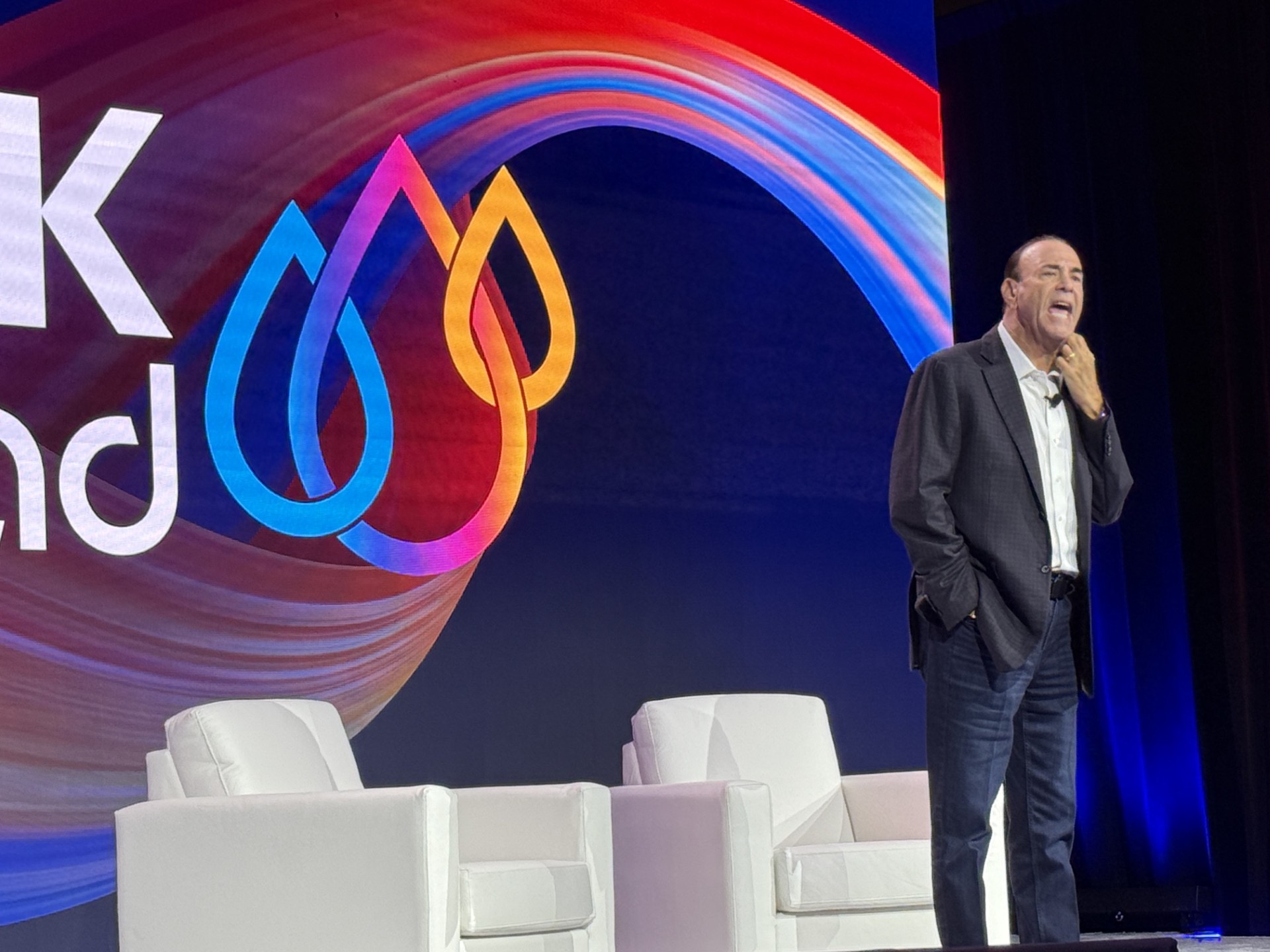
John Taffer, host of the reality show Bar Rescue and keynote speaker of the thINK Ahead conference, shared tips on fostering a culture of growth.
Invigorated for a Day of Learning
Isao “Sammy” Kobayashi, president and CEO of Canon USA, spoke to attendees on the morning of day two to explain Canon’s “Power of One” initiative.”
“In the past, operating in silos sometimes created friction,” he said. “By bringing our teams, our resources, and our expertise under one cohesive organization, we have streamlined how we innovate and how we respond to you. … Let me be absolutely clear: these changes reinforce, rather than disrupt, Canon’s unwavering commitment to production trade.”
Shortly after Kobayashi’s remarks, Rob Reddy, SVP, sales, Canon USA, brought out a Canon-packed panel to discuss how Canon keeps its focus on the customer and what lies ahead for the future of Canon. To the astonishment of the crowd, during the panel, Lisa Weese, director, product strategy, announced that in the next 12 months, the speed on the ColorStream 8000 will increase to 754 fpm.

A Canon-packed panel was led by Rob Reddy, SVP, sales, who was joined by (from left) Kevin Roman, director, professional services; Jason Fligman, SVP, senior strategy and support; Lisa Weese, director, product strategy; and Rolando Martinez, senior director, marketing, production print.
As is customary each year at thINK, there were several session tracks for attendees to choose from, one of which focused on more forward looking education.
One of those sessions was led by Andy Paparozzi, chief economist at PRINTING United Alliance. He highlighted key challenges facing the printing industry and data from the new Alliance Insights Mid-Year State of the Industry survey, which is sponsored by Canon USA. On average, he said, sales are up just 4.1% – however inflation-adjusted sales, a key measure of production or output, were essentially flat.
“Barely more than a quarter of the participants in our research report that they have been able to increase pre-tax profitability so far this year,” he noted, calling it “a classic textbook profit squeeze.”
He cited factors like uncertainty in the war with Iran and erratic tariff policies negatively impacting businesses.
“At best, realistically, we should expect overall business conditions to improve only gradually through mid-year,” he said.
The bulk of Paparozzi’s session was about how the printing industry is using AI. About 38% of survey respondents said that in two years they feel AI skills will be “very important” to their business. When asked which positions respondents expect to utilize AI most, they listed marketing, sales, design, and executive leadership, in that order.
Only 17% said they offer AI training, while 50% do not, and have no plans to do so.
He praised AI-powered predictive analytics for their ability to analyze a variety of data in real time, bringing far more information to a problem.
“AI predictive analytics will transform how businesses analyze trends, forecast, and manage uncertainty and risk,” he said.
Another session was led by Marco Boer, president of IT Strategies, who started off his panel by telling attendees that it “feels like we’re entering the second wave of inkjet customers.”
Three of those inkjet users joined him on a panel: Sam Campitella, CEO and partner, Vivid Impact in Louisville, KY; Bryan Baker, director, client solutions development, Conduent in Florham Park, NJ; and Gina Danner, owner and CEO, NextPage in Kansas City, MO. They discussed the future of inkjet, labor challenges, and how inkjet impacts the future of inkjet technology.
One of the trends Campitella notes is that his company saw larger runs being replaced with short runs with quicker turnaround times. Inkjet has allowed Vivid Impact to keep up with customer needs.
In terms of labor, all three panelists noted challenges in hiring and retaining employees, but Danner put it to the audience straight.
“We focus on a culture factor and have some very defined core values,” she said. “We're driven, versatile, protective, and kind. … They're simple words and we literally hire, fire, train, retain, and reward around them. You know how hard it is to have a highly-skilled producing person who's a jerk and not kind, and you sit down and explain to them that behavior doesn't work here.”
The final topic was focused on the future of offset and if it has a place in a modern print service provider’s workflow. While the panel agreed there is still a purpose for offset, Danner noted that she would like to say she has bought her last offset press.
When asked if any of the three companies could live without inkjet today, the answer was a unanimous “no.”
On the final day of the event, four attendees shared some of the key takeaways from the event in their segments: commercial printing, direct mail, book publishing, and transactional. They discussed many difficult topics, including the impact of tariffs, postage increases, and labor issues, as well as the need to use inkjet to adapt to changing customer needs.
The panelist from the commercial segment, Zack Duchene, facilities management at Advantage ColorGraphics in Anaheim, CA, noted the company integrated envelope services to meet customer demand.
“We're going to have to be more nimble,” he said. “We're going to have to offer different things and continue to adapt with our customers and to do the things that they need.”
It’s a great lesson in the power of digital technology, enabling print service providers to evolve. Throughout the week, one message surfaced again and again: success in today's print industry isn't just about investing in new technology — it's about investing in people, culture, and the willingness to adapt. Whether the discussion centered on AI, labor, shifting customer expectations, or the debut of the varioPRESS iV7, attendees left Boca Raton with the same takeaway: the printers that continue to evolve alongside their customers will be the ones shaping the next chapter of commercial print.


Ashley Roberts is Content Director of Printing Impressions.

Bob has served as editor of In-plant Impressions since October of 1994. Prior to that he served for three years as managing editor of Printing Impressions, a commercial printing publication. Mr. Neubauer is very active in the U.S. in-plant industry. He attends all the major in-plant conferences and has visited 200 in-plant operations around the world. He has given presentations to numerous in-plant groups in the U.S., Canada and Australia, including the Association of College and University Printers and the In-plant Printing and Mailing Association. He also coordinates the annual In-Print contest, co-sponsored by IPMA and In-plant Impressions.


