Elevating Embellishments

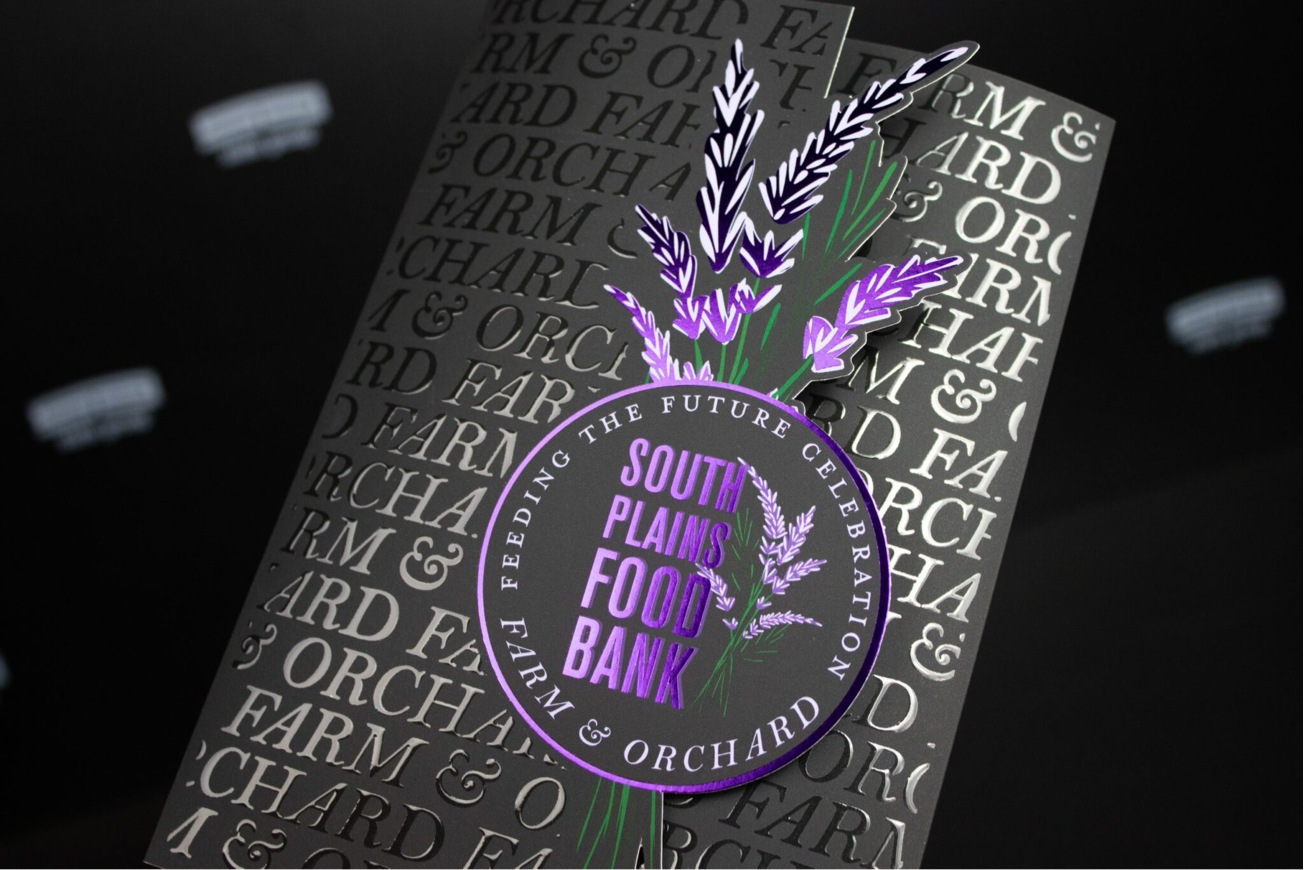
Velvet laminate, raised spot UV, and purple foil were used on this brochure for a local food bank. | Credit: Slate Group
In a world where information is constant and almost always digital, print has the opportunity to create an emotional response in the people who see it. This is what many print service providers (PSPs) strive for, with the hope that the recipient of the printed piece wants to touch it or hold on to it for an extended period of time. Lisa Cross, principal analyst of Alliance Insights, notes that embellishments in particular are especially potent when it comes to eliciting emotions in
a recipient.
“Embellishments transform print from functional to unforgettable — creating tactile and visual experiences that engage emotion, heighten creativity, and command attention,” she says.
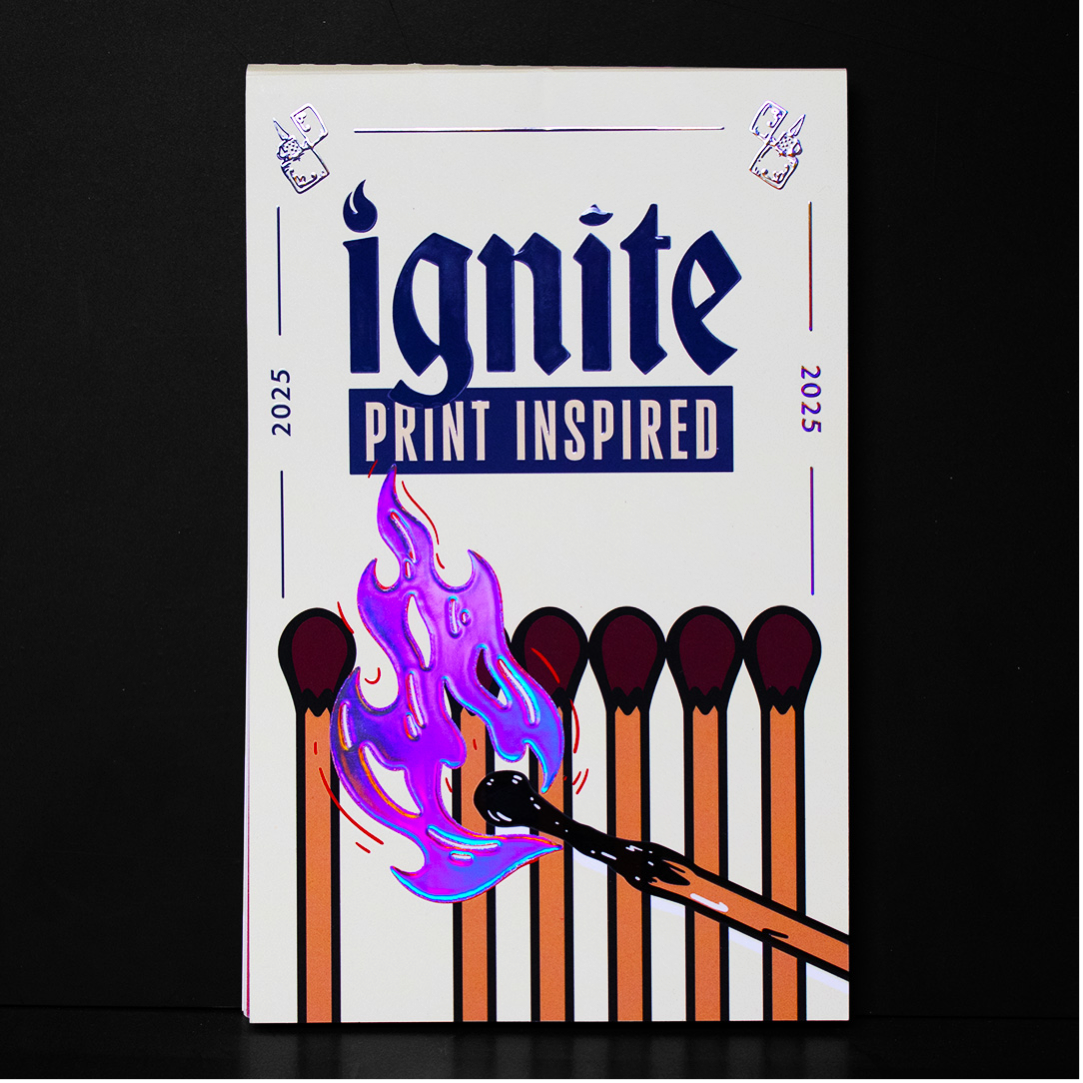
Slate Group hosted a "Print Inspired" marketing event and used velvet laminate and duplo holigraphic cold foil on the event program.
In fact, for Slate Group in Lubbock, Texas, emotion is a driving force behind its embellishment strategy. Trey Laverty, director of sales development, explains that the company is focused on creating an “experience” and a “sense of emotion” when it comes to the embellishments Slate Group employs for its customers. There is one caveat: The embellishments need to fit the message of the printed piece.
“I just had a meeting with a hospice company, and we’re talking through velvet laminate and soft touch because it’s soothing,” Laverty says. “It’s calming to people going through tough times. Whatever the experience needs to be, good or bad, we can accomplish that.”
Laverty notes that Slate Group works with its customers to find the right enhancement solutions — which sometimes means experimenting with them to meet budgetary limits or adhere to their creative choices.
“Whenever you can bring the customer into the process … they find a lot more value in that,” he says. However, bringing a customer into the process is much easier when the enhancement technologies are in-house.
Bringing it In-House
Laverty explains that Slate Group now has a variety of embellishment equipment — both analog and digital — including two Duplo DuSense DDC-810s and a new Duplo DuSense DDC-8000, as well as one Heidelberg Easymatrix 106 diecutter, two Heidelberg cylinder presses, a Kluge ApexFoil hot foil device, HP Indigo 18K and 6K+ digital devices, and a GM DC350Flex label finisher. It didn’t always have this level of embellishment technology, though.
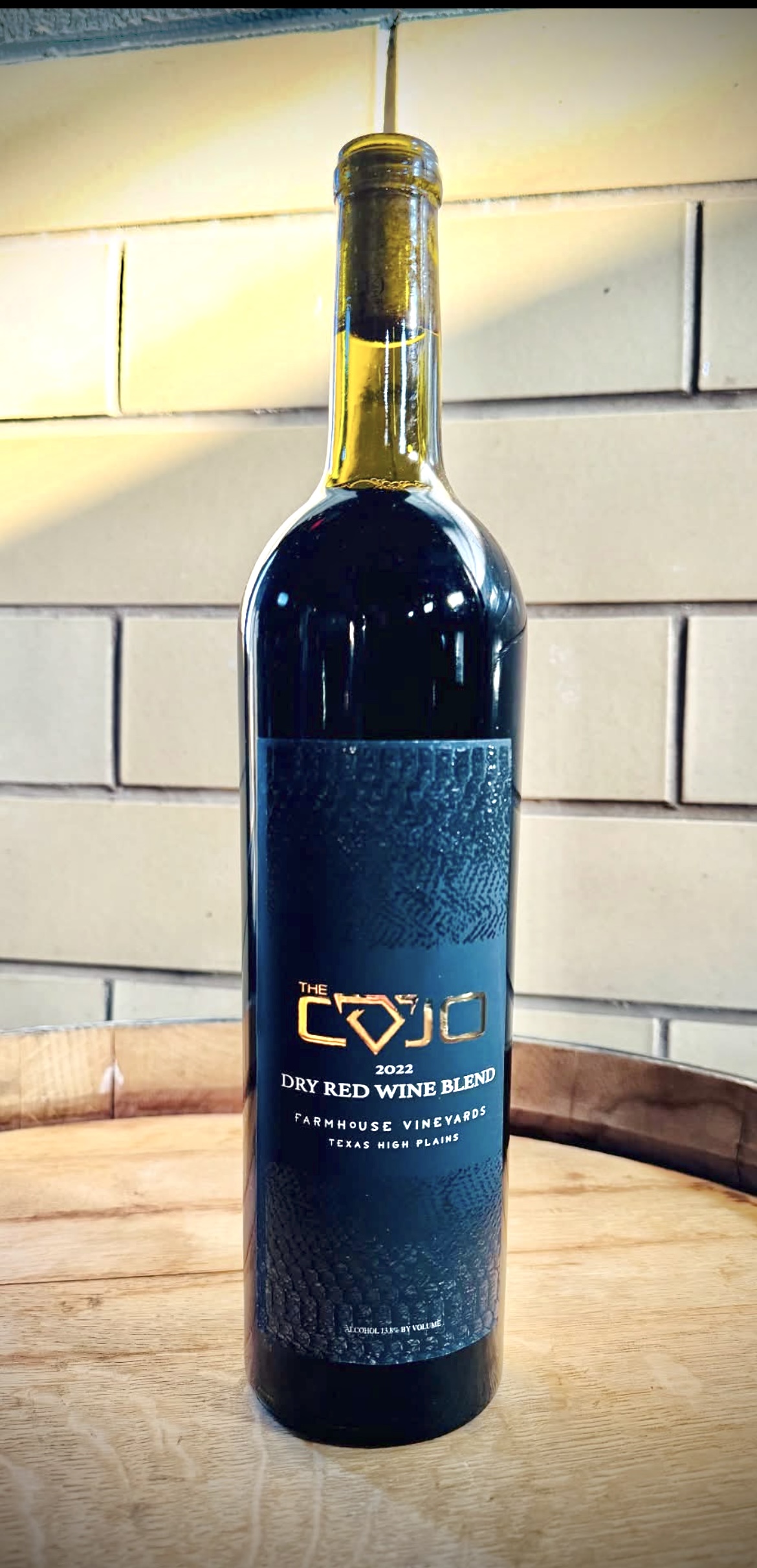
Embellishments are a popular choice for labels. Here, velvet laminate, raised spot UV, and cold foil were used. | Credit: Slate Group
“Embellishments have been rapidly growing over the past couple of years, especially for us,” he says. “[Embellished labels] are going to be all new for us. We’ve outsourced a lot and we’ve grown the business, so we’ve made the decision to bring it in-house.”
One of the reasons the company brought the technology in-house is because of the increased level of control. Laverty says the team is able to do more testing and experiment with how far it can “push the limit and offer new things for [its] customers.”
He also points out that it allows the company to move faster and encourages the sales team to sell more embellished print.
“One thing I’ve learned is that we’ve outsourced things before, but [the sales team] doesn’t feel as comfortable selling it,” he notes. “As soon as we put something on the floor and they go down there and can see it and understand it, they start selling it like crazy.”
For instance, when the company installed its first Duplo device with raised UV capabilities, it was outsourcing just two or three jobs with raised UV. Within six months of installing the device, Slate Group was notified it was purchasing more polymer than any other PSP in the country.
Natalie Neyenesch, vice president of operations at Neyenesch Printers, a PRINTING United Alliance member company, points to many of the same advantages mentioned by Laverty. The San Diego-based company was outsourcing a large volume of embellished work. Then, in June of this year, it purchased a new Konica Minolta AccurioJet 30000 inkjet device and AccurioShine 3600 high-end embellishment device.
“A goal of ours here at Neyenesch is to bring as much as we can in-house,” she says. “You have more control over your quality, and you have more control of your product.”
Neyenesch adds that offering these enhanced services in-house saves the company time.
“I’m not wasting a day to get it to our vendor, a day to get it back from our vendor, and a couple of days in between,” she says. “Also, our team [needed to take] the time to communicate and handle the logistics between vendors. It’s nice to handle that in-house and take those extra days on our own end.”
One of the bigger benefits Neyenesch mentions is the ability to prototype for clients. She explains that the team is able to work with clients who would not have ordinarily gotten embellishments in the past with a “show don’t tell” strategy. For example, if a customer orders a job, the team will take a few sheets from the job and put them on the AccurioShine to show them what it would look like with a particular varnish.
“Then they see it with and without it and they say, ‘Of course I want the embellishment,’” she says. “It’s getting customers to think outside the box on how to tie in embellishments to their current design.”
On the conventional front, Mike Antonucci, president of CPCneutek in Grand Junction, Colorado — which has locations in Utah and New Mexico — notes that speed, automation, AI integration, camera inspection, quick changeovers, and drying time were key factors in the company’s recent installation of an eight-color Koenig & Bauer Rapida 106. Prior to adding the sheetfed offset press, the company did many of its embellishments off-line; now it is able to do some embellishments in-line, such as reticulating UV varnish.
To achieve this effect, Antonucci explains the company uses a special reticulating coating on top of the litho varnish plate to create a beading effect.
“Every area that we don’t apply the varnish, a flood gloss creates a gloss effect, and the UV varnish reticulation dries through the gloss,” he says.
CPCneutek also uses a 40" Sakurai off-line silk screen coating press for high-end UV coating effects such as raised UV glitter, something it wouldn’t run on its Rapida 106.
“I don’t think you want to have glitter on an expensive press like that,” Antonucci advises. “Having glitter and raised UV in those chambers is not a good idea, in my opinion.”
Show Don’t Tell
Similar to Neyenesch’s note about the power of putting embellishments in a customer’s hands, Antonucci says his company always provides options for embellishments on its quotes to customers. He explains that the sales people have been trained to make suggestions, and the company is working on a UV special effects book called “Pro Tips.”
“On the back of each swatch, there will be the best outcome for a particular effect,” he says. “We're going to try to bridge that gap … because a lot of times, the customers have an ad agency or an internal marketing person who doesn’t have a lot of print knowledge and experience. So they have this vision in their head of what that should look like, but that in reality, it won’t work.”
Slate Group is using an “inspiration page” on its website to showcase its different capabilities.
“We’ve created this relationship where we are idea generators,” Laverty says.
The company works with the customer by looking at different factors such as quantity and budget, and then provides the customers with samples. It makes suggestions for embellishments, such as spot UV or foil, based on the customers’ artwork.
“Then we start looking at budgets and quoting it and say … ‘Here’s the Cadillac, here’s the Pinto,’ and trying to figure out the right fit for them,” Laverty says.
One product that Slate Group is doing a lot of embellishments on is book covers, an area CPCneutek is also tapping into. Laverty says Slate Group does a variety of enhancements for books, such as soft touch coatings with raised UV or a felt-like cover with foil.
Both companies note that tactile enhancements are popular, such as sandpaper and leather textures. In fact, according to a 2025
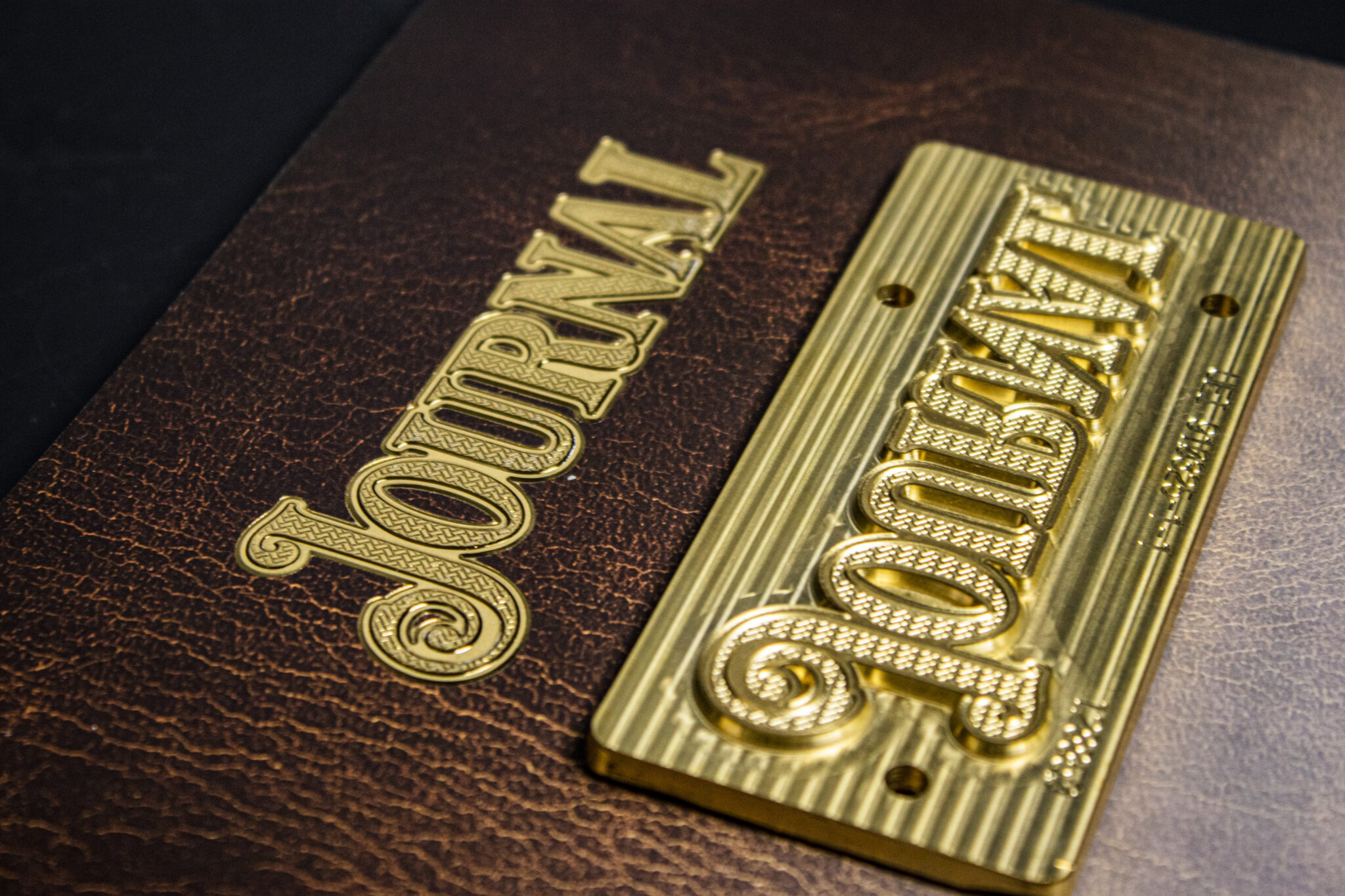
Embossing is another popular embellishment choice. | Credit: Slate Group
Alliance Insights research study evaluating print buyers’ interest in emerging printing technologies, 64% of respondents said they were extremely or very interested in exploring “specialty coatings,” such as glitter and sandpaper texture. Other categories of interest were foil effects; textured effects for a tactile, embossed, or debossed effect; spot colors; spot gloss; and clear flood coatings. The No. 1 area of interest was specialty colors — such as white, metallic, or fluorescent — with 73% of print buyers reporting they were extremely or very interested in this.
Alliance Insights’ Cross notes that technological advancements are making these capabilities more accessible for PSPs.
“What was once considered a premium luxury is now within reach for more print projects,” she says. “With advances in digital enhancement technologies, embellishments such as foil, texture, and specialty coatings have become more affordable and efficient to produce — even on short runs. Our research shows strong interest in these effects, reflecting how accessible innovation is helping printers add value and elevate the impact of print.”
Although advances are making it more accessible, Neyenesch advises other PSPs to do their due diligence when it comes to adding any new technology — including embellishments. For her company, there was a learning curve with production on its new technology. The team quickly learned that it can’t bleed off the edge; instead, embellishments need to be about 3/16" from the edge.
The company also found that its technology works best for patterns and designs, rather than flood coating. And, importantly, the team learned there is a 24-hour dry time. That’s why testing and deeply understanding the technology is imperative, Neyenesch notes.
“When it comes to purchasing any new type of equipment, whatever it is, take your time and do all the testing you want to do,” she says. “This is a huge investment you’re making, and you want to be confident that it works with all of your equipment, your finishings, your coatings, whatever it may be. Testing and sampling is really important.”
Ashley Roberts is Content Director of Printing Impressions.