


Allied Printing: Green, Growing, and Scaling Fast

For some print service providers, sustainability initiatives have climbed to the top of the priority ladder. Allied Printing Services counts itself as one of them.
“It’s been a nice to have, but it’s becoming more of a need to have,” John Sommers says.
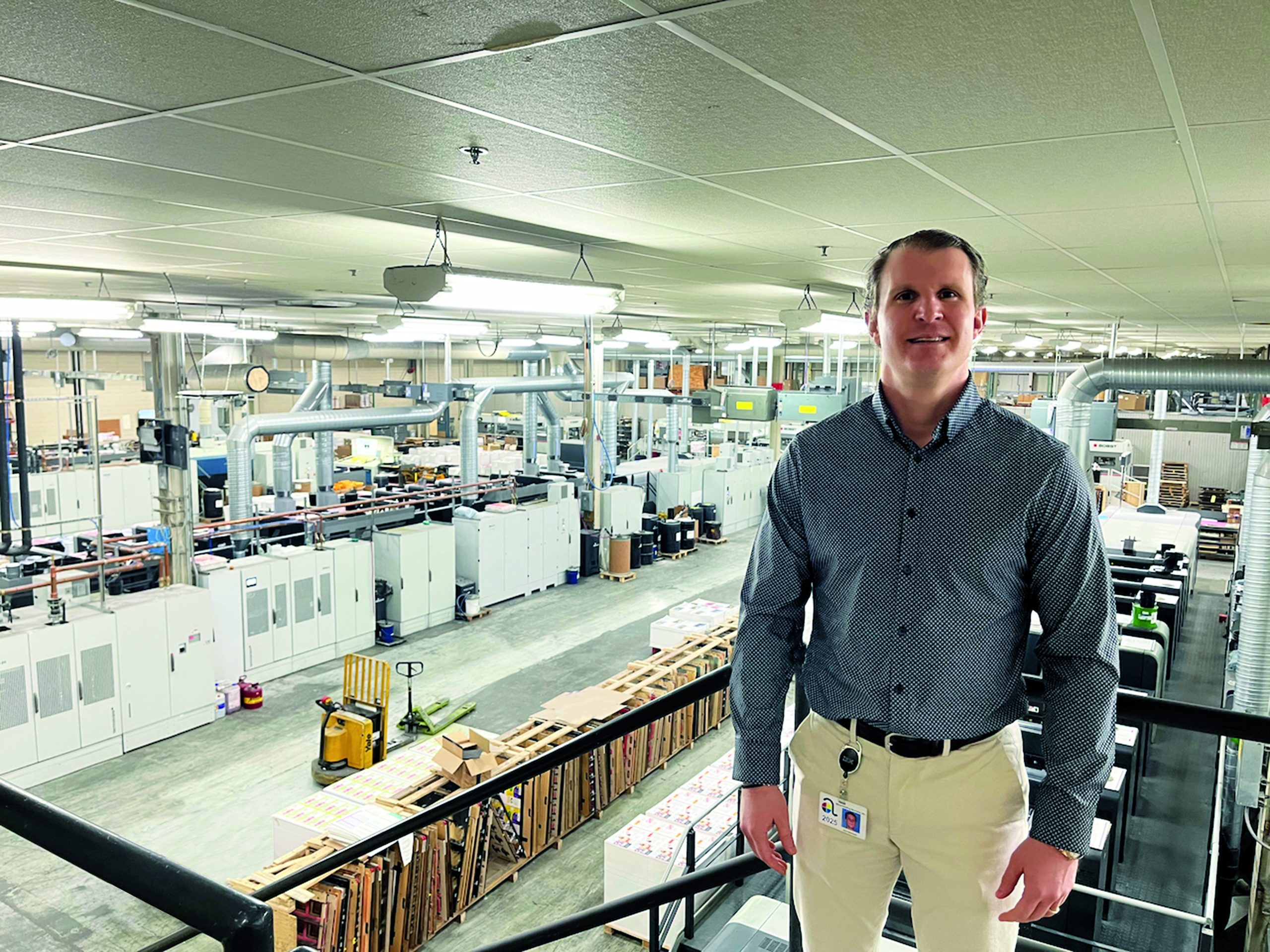
John Sommers is the president of third-generation family-owned Allied Printing Services in Manchester, Connecticut.
Sommers is president of Allied Printing Services, a third-generation family-owned commercial printer, based in Manchester, Connecticut. He explains that while the environmental focus is a recent shift in the company’s 76-year history, it is now firmly part of its DNA.
In 2014, Allied installed one of the largest rooftop solar arrays in Connecticut, which now supplies 20% of the facility’s power, with a fuel cell generating an additional 60%.
“That was when we really started to take things seriously,” he says. “After that, we replaced every light bulb in the shop with LEDs. We also have regular energy audits and a more energy-efficient HVAC system.”
The drive to become a more sustainable company doesn’t end there. Sommers notes the company employs an in-depth recycling program for aluminum and paper, a process that has had a significant impact, as well as a virgin paper baler and a plastic baler.
“When we started adding all of these different recycling streams, we went from producing a dumpster of waste per week to a dumpster of waste per month,” he says.
Allied is also able to save on its energy bill by peak shaving and load sharing, powering its microgrid battery energy storage system at night and then pulling from it during the day or at times when more energy is typically used. The microgrid can be charged by Allied’s solar and fuel cells, as well as natural gas. Its diesel generators can power the entire facility if the grid goes down. However, because the units are aging, the microgrid was an opportunity to replace the diesel generators and reduce Allied’s energy spend and usage.
“We were looking into natural gas-powered generators because with diesel generators, many times when the grid goes down, you’re not able to pump gas at the gas stations,” he says.
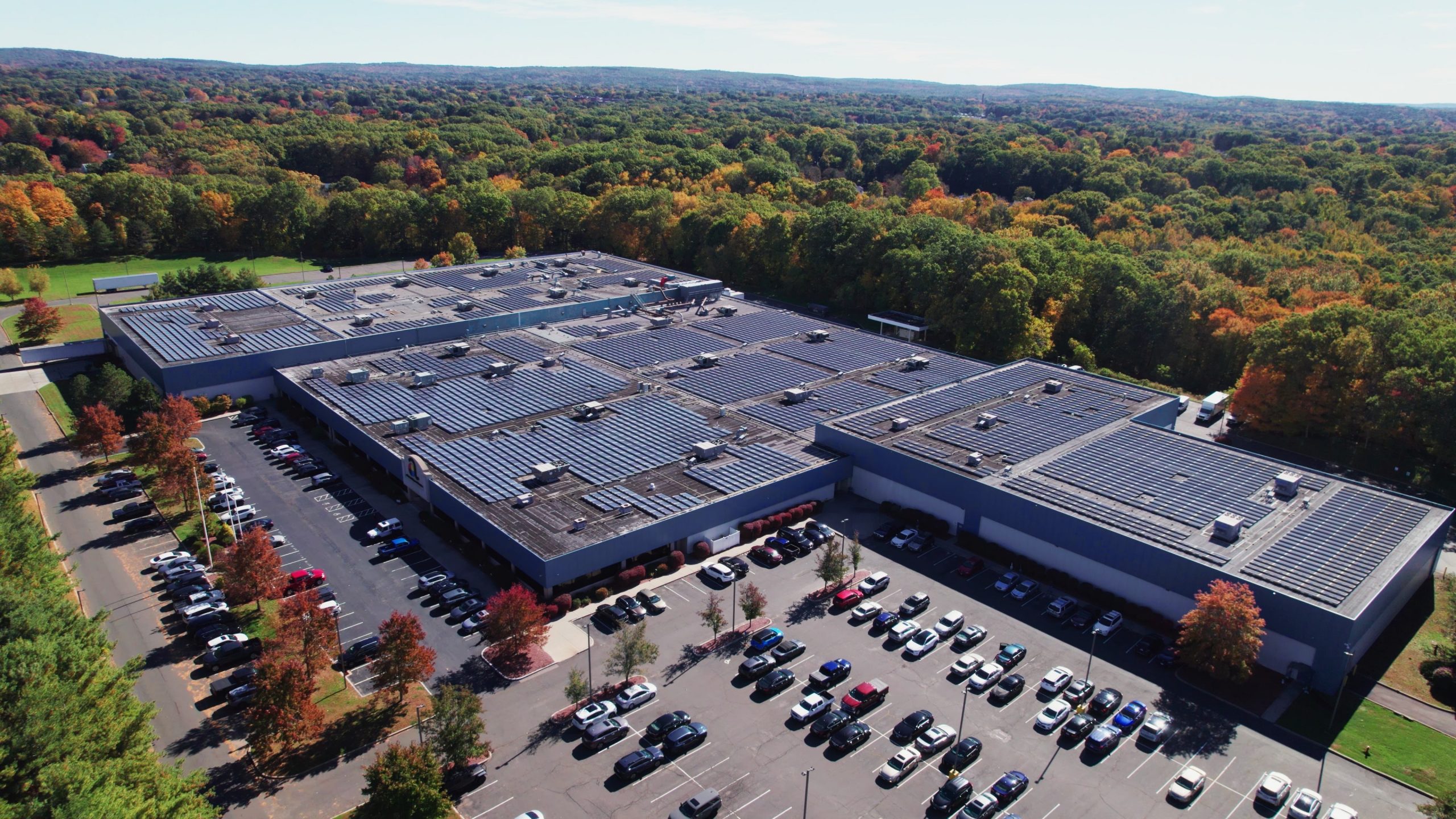
Allied’s rooftop solar panel array is one of the largest in Connecticut and powers 20% of the facility.
Evolving Customer Demands Drive Change
Many of Allied’s more environmentally conscious initiatives — such as its use of FSC-certified materials and its ISO 14001 certification — have been driven by shifting customer expectations. That includes its goal to become carbon neutral in the next few years.
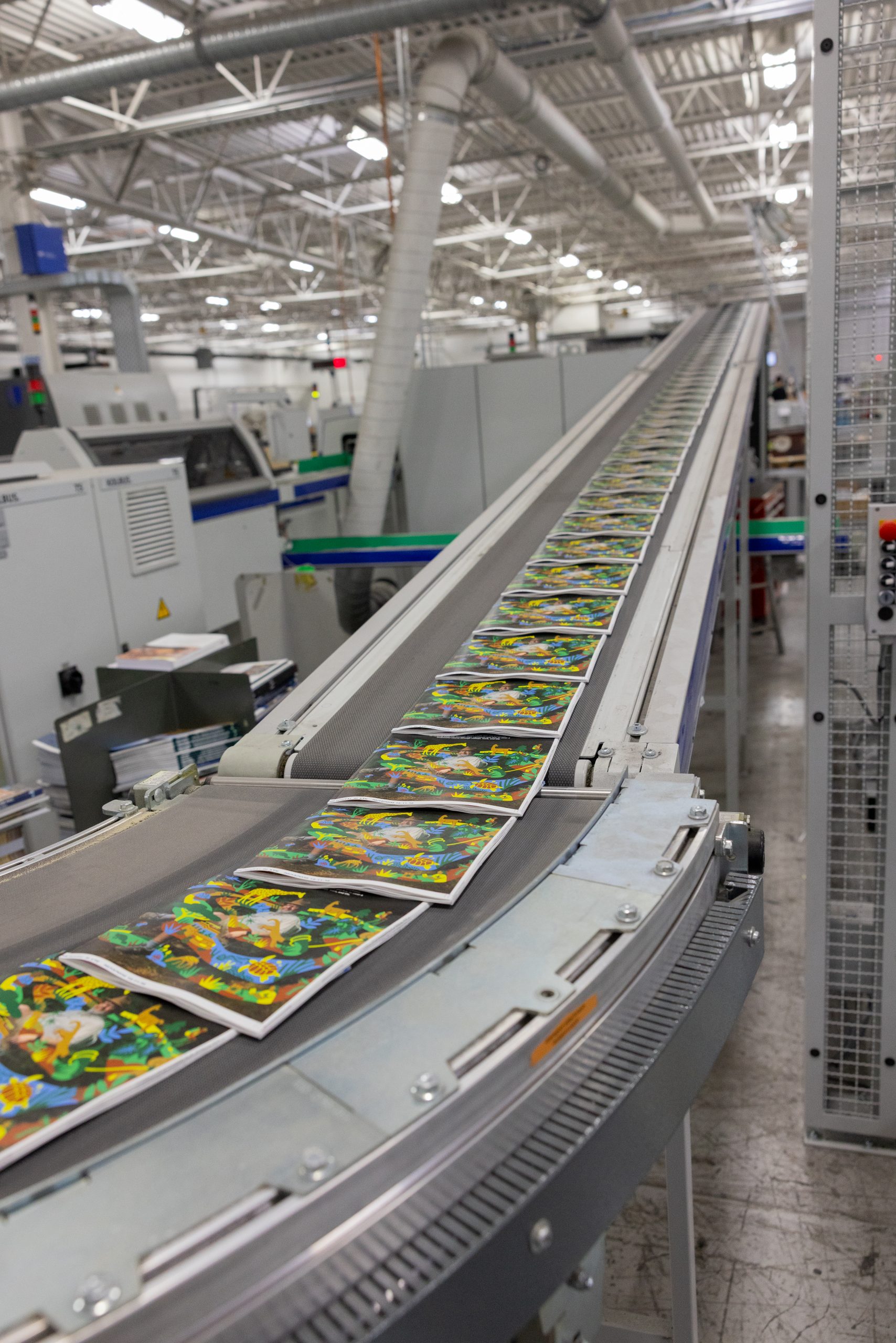
Allied serves the healthcare, financial services, and retail spaces, among several others.
“One of our biggest customers wants all of its suppliers to be carbon neutral by 2030,” he says.
The company appears well on its way to meeting this goal. Sommers notes that air expelled from Allied’s web press is actually cleaner than ambient air, of example.
Customer needs were also a driving factor behind its recent EcoVadis certification, a sustainability rating based on a company’s environmental, social, and ethical performance. Sommers explains that many of its pharmaceutical customers are now looking for this certification in their printer partners.
Some customers also ask for sustainability sheets, something Allied provides upon request.
“We have a major mutual fund that we print for and they present this report to their board of directors after every annual report,” he says. “We share how many trees they saved by using post-consumer content, how many gallons of water, how many gallons of gasoline, and how many fewer VOCs were released just based on the project produced.”
Sustainability isn’t the only area of growth Allied is seeing as it relates to customer demand.
“Our large-format department has been rapidly growing between 200% and 300% every year since we got into that business,” Sommers shares. “We put in a couple swissQprint [Impala and Karibu] last year after drupa and very quickly flooded those machines. Last year, we added a second shift and early this year we added a third shift and we’re still straight out working weekends. [It’s a] good problem to have.”
The rapid growth has enabled Allied, which started in a 150-sq.-ft. facility, to break ground on a 70,000-sq.-ft. expansion. The expansion joins the company’s existing 260,000-sq.-ft. space and is expected to be finished by the end of 2026. Complementing the additional space, Allied is investing in new equipment across its operations, including a new Agfa Jeti Tauro H3300 wide-format hybrid UV-LED inkjet printer, a Kongsberg Ultimate digital cutting table, a BOBST HANDYPACK, and a Palamides robot palletizer that will be matched with Allied’s Müller Martini saddle-stitcher.
“It will help to decrease labor and repetitive manual operation that can lead to a lot of injuries,” he says, which pairs nicely with another of Allied’s areas of focus.
“One of our biggest initiatives this year is health and safety,” he explains. “Last year … we did a Health and Wellness Fair. It wasn’t the first time we ever did it, but it was the first time we did it in a while and we’re doing it again this year. … We’re working with our worker’s compensation insurance provider and bringing in ergonomic specialists to help us to reduce injuries from repetitive motions. That’s why we’re installing robotics to reduce those accidents.”
While its large-format department is growing, Allied boasts a significant footprint for its bindery as well.
“We have the largest freestanding bindery in the northeast,” Sommers notes. And after looking through the Printing Impressions annual list of the largest printing companies in the U.S. and Canada, as ranked by annual sales, Sommers shares that Allied is the largest single-plant commercial printer in the country.
A Future Focused on People
Sommers says the company is investing not just in equipment and the expansion, but on finding the next generation of leaders through training and internal promotions. He explains that 10 years ago, the average age of the company’s sales force was 58. Today, that demographic has shifted, positioning the company for long-term health.
“The managers of our three largest departments are all under 40 years old,” he says. “Our big succession area is our sales department and we’ve been successful in bringing young folks into the industry.”
Allied even hosted a leadership class through the state of Connecticut.
“It was a crash supervisor and management course that was 12 weeks, meeting once a week for four hours,” he explains. “There were 23 people in the class who were all organic promotions within the company that went into leadership positions.”
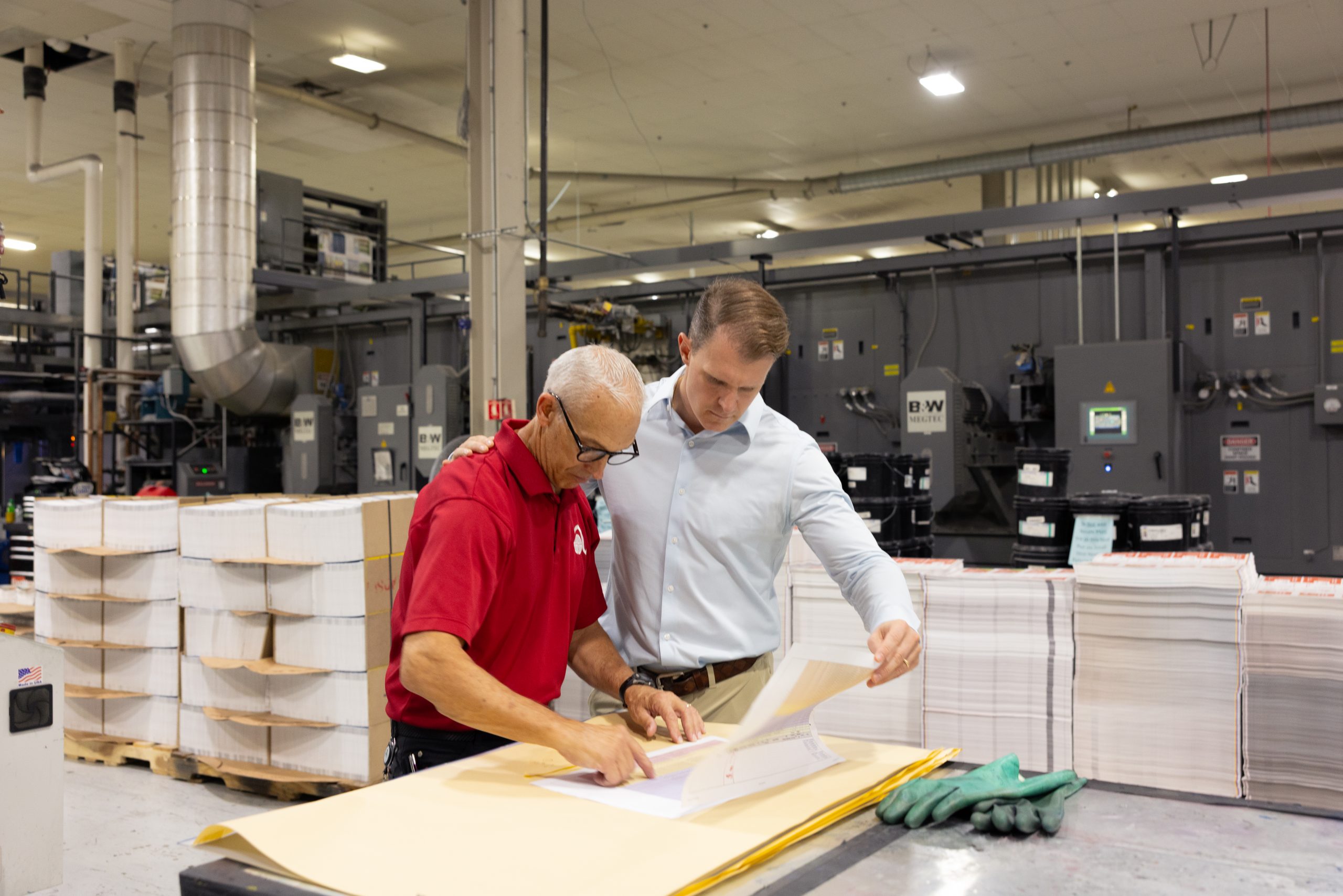
(From Left) Kyle Howard, web supervisor, and John Sommers, president, look over paperwork on Allied’s production floor.
Backed by a focus on its customers, a significant expansion, and continued investments in its people, Allied is looking ahead with confidence and building its next chapter.
“We’re positioned for growth,” he says, “and aggressively investing in our future.”
- Categories:
- Business Management - Sustainability
Ashley Roberts is Content Director of Printing Impressions.


