


Why Packaging Keeps Pulling Printers In


As the barriers that once kept print service providers (PSPs) confined to their own lanes continue to fall, the label and packaging segments of the industry stand out as ideal growth opportunities. For commercial printers in particular, ongoing digitization of formerly reliable print applications has exacerbated the need to expand into segments with stable demand and long-term viability. The latest reporting from PRINTING United Alliance and its research division, Alliance Insights, reveals that PSPs are not only exploring the packaging world but are also actively moving into the segment and increasing their profitability.
Advancements in digital printing and finishing technology are largely responsible for the increased accessibility of label and packaging production. But for those seeking to embrace convergence and enter these segments, simply investing in equipment is not enough. Success in packaging necessitates a well-thought-out workflow, a sales and prospect pipeline, and an education on the myriad external factors shaping the industry’s future.
For example, Spectrum Packaging Corp., which was founded as a commercial printing company in 1997 in Orlando, FL, gradually made the transition over more than a decade. Though it is now a successful folding carton printing company, its president, Mark Mills, says switching to packaging presented a steep learning curve.
“We did a lot of research, talked to a lot of people,” Mills said during the Packaging Forum at the 2025 PRINTING United Expo. “We joined an association of other packaging companies, and they were all really helpful. We asked them, ‘What did you buy? Why did you buy it?’ … And so we asked a lot of questions to a lot of people — and then take a lot of notes, visit plants, watch it run.”
Packaging as a Supplementary Segment
According to the latest data from Alliance Insights, examples like Spectrum Packaging, in which a commercial printer makes a wholesale shift into packaging, may be an exception. In fact, in its latest State of the Industry Report, which launched in May and is sponsored by Canon U.S.A., Alliance Insights reports that 35% of State of the Industry survey participants print labels or packaging as a secondary segment.
This demonstrates that for many printers, diversification of their offerings is exactly that — an additional product line to supplement their current business model. Alliance Insights research confirms this product offering expansion trend in its recent report, “Profiting Through Convergence.” More than 400 PSPs were surveyed for the study, and on average, respondents report serving three distinct print segments beyond their primary segment. In fact, only 17% claim to solely serve a single segment.
The study reveals that labels and packaging are the predominant convergence targets, with 73% of commercial printers reporting they have entered the label market, while 32% have entered folding cartons. Among wide-format graphics printers surveyed, nearly half (47%) have moved into labels, while one-third (33%) have moved into corrugated, likely due to their existing equipment’s ability to handle corrugated substrates.
While prior Alliance Insights studies also revealed that labels and packaging are PSPs’ primary convergence targets, this latest edition demonstrates that these moves have been largely successful. Among respondents that have entered the various packaging segments, profitability has been nearly universal, with average profitability increases hovering around 5%. (Table 1)

For PSPs that have expanded into new segments, nearly three-quarters (74%) say the decision was motivated by customer demand. Most commercial printers likely serve clients who need labels or packaging and may currently source them elsewhere. By adding packaging, PSPs not only help their customers keep all their print needs under one roof but also add a reliable, profitable product offering.
Education is the Differentiator
Printing is often the easy part for PSPs expanding into packaging. Though the technologies may vary, applying ink to a substrate is second nature for these companies. Those best positioned for success should approach a convergence move with a desire to gain expertise in what makes packaging production different from traditional commercial printing. This includes finishing and converting, sustainability implications, product protection, and beyond.
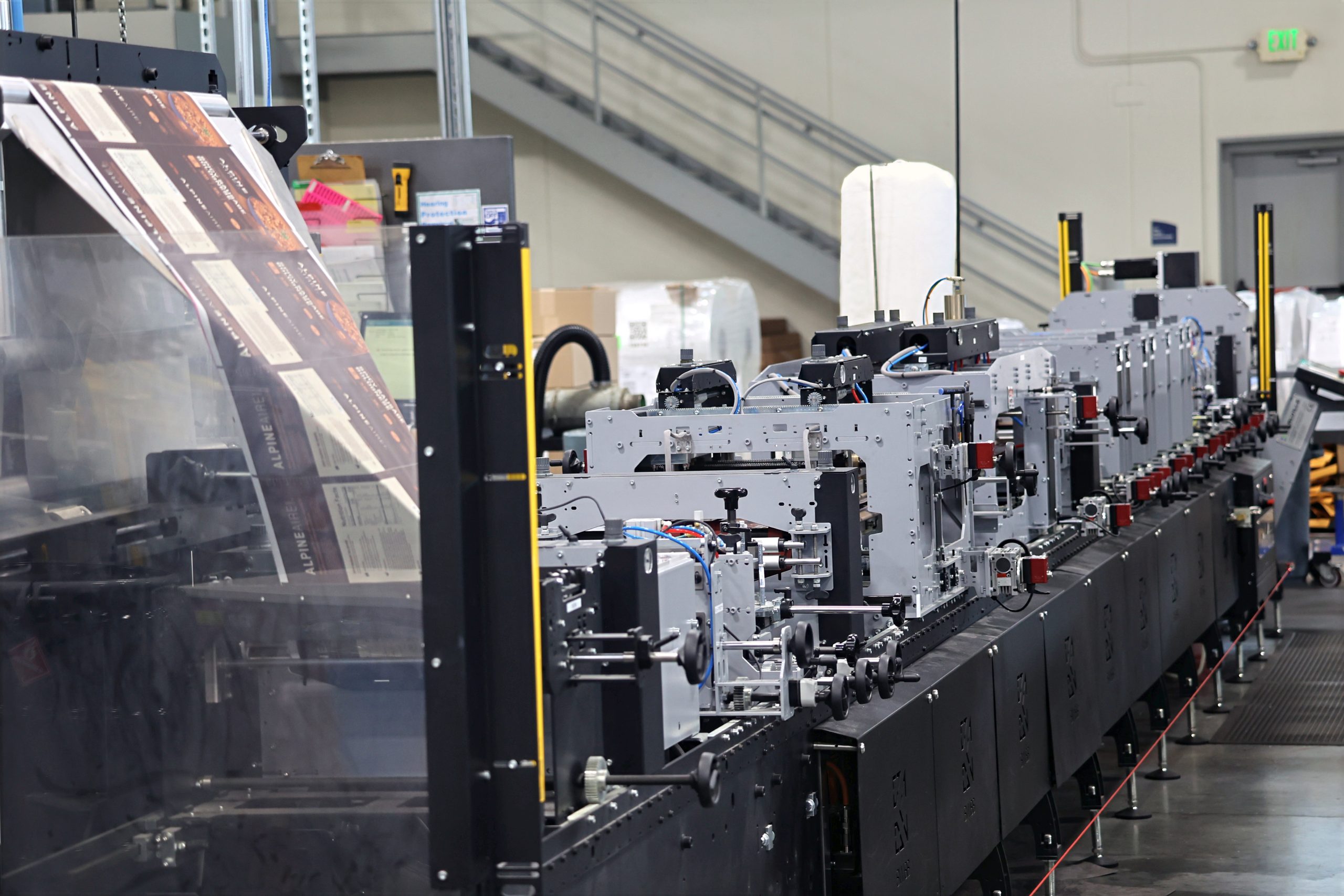
Lauterbach Group utilizes the HP Indigo digital printing platform to support flexible packaging production for middle-market brands. | Credit: Lauterbach Group
For example, Mills says despite Spectrum Packaging’s experience as a commercial printer working with a wide range of paper, the company had to completely rethink how it selects the right substrate for a job.
“We thought we knew about paper. We didn’t know anything about paper,” he said. “Who we buy from; what we buy; how we buy it; how that paper works in a freezer, with beverage; all sorts of coatings. … There’s just so much that affects paper. The paper affects that product.”
But education is not just critical for those new to the packaging world. The high-demand flexible packaging segment has emerged as one of the most attractive targets for packaging convergence for experienced label and package printers. SunDance for example, also based in Orlando, FL, is no stranger to convergence, having expanded its offerings to include wide-format printing, mailing services, labels, folding cartons, and flexible packaging.
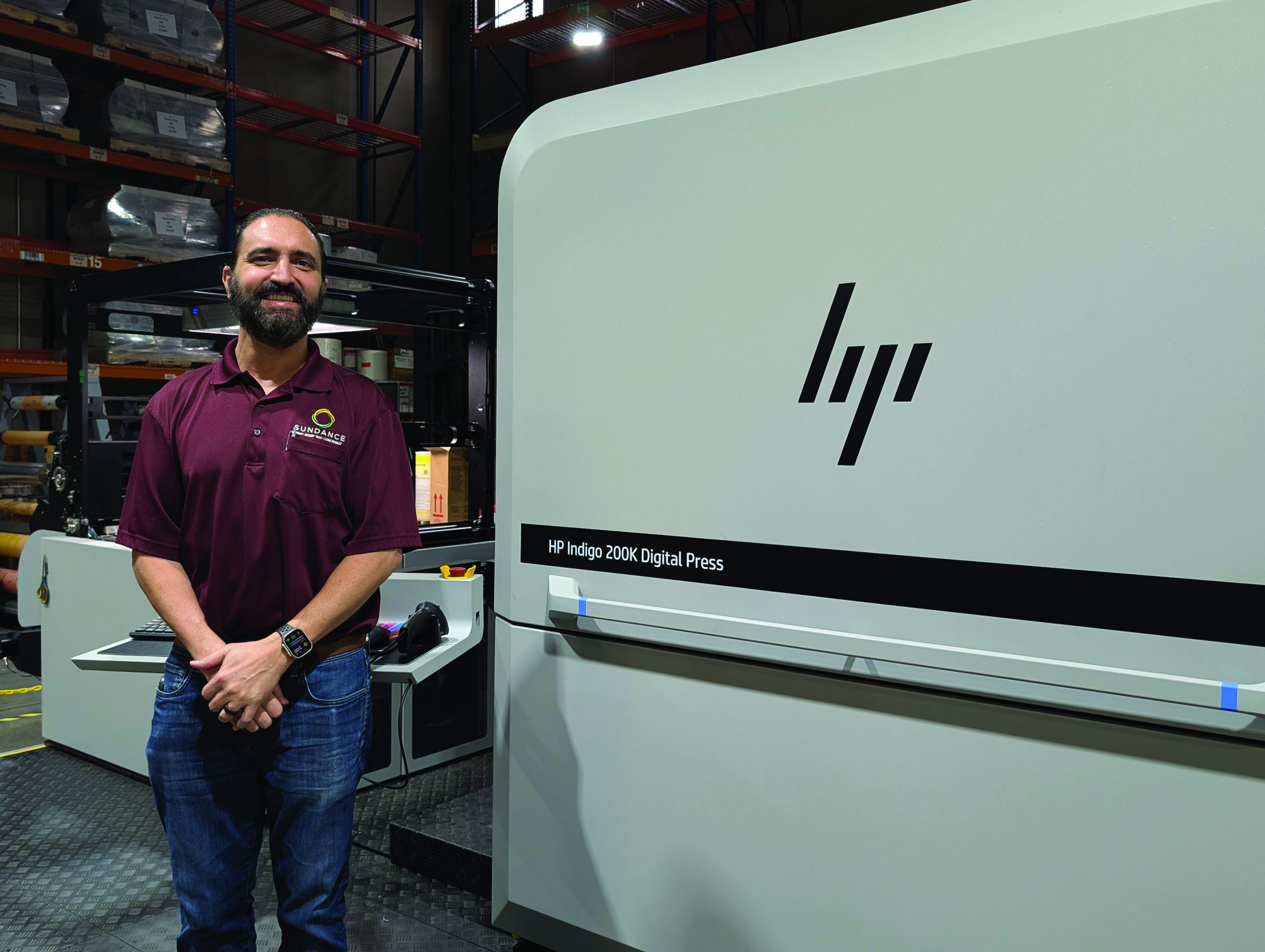
JohnHenry Ruggieri, president of SunDance, stands with the company’s HP Indigo 200K digital press. | Credit: SunDance
Despite having prior packaging experience, company President JohnHenry Ruggieri explained in a recent Packaging Impressions article, that SunDance worked to enhance its quality control capabilities since it was now producing packaging designed for direct food contact.
“That was such a huge shift for us, moving from secondary packaging like folding cartons to being the primary food barrier,” Ruggieri says. “It raised the bar for everything we do, from materials to processes.”
Sustainability is also a critical element of label and packaging production, particularly as evolving regulations and legislation, including extended producer responsibility (EPR) laws, have shifted sustainability from being a “nice to have” aspect of packaging to now being one with financial implications for brand owners.
Shane Lauterbach, president and CEO of Sussex, WI-based Lauterbach Group, shared that his company is exploring ways to increase the sustainable attributes of its flexible packaging. Primarily a label printing company, Lauterbach Group has also added flexible packaging to its offerings and is expecting that portion of its business to grow.
“Sustainability is very important to us and there are some very neat opportunities not only in recycled content and that kind of methodology, but downgauging, using less material, and the great power that has to the overall economic benefit,” Lauterbach told Packaging Impressions.
Packaging on the Show Floor
For companies seeking to get started in labels and packaging, PRINTING United Expo will feature several exhibitors showcasing printing and finishing equipment that can help them get a foot in the door. Digital press manufacturers, including but not limited to Domino (Booth C2673), Durst (Booth C1614), Fujifilm (Booth N6042), and Screen (Booth N6143), will be on site and can share how their solutions provide an entry point into the packaging segment. Additionally, TLMI, the North American association for the tag and label industry, will be on site with a booth (N7625) that can offer attendees further information about those segments.
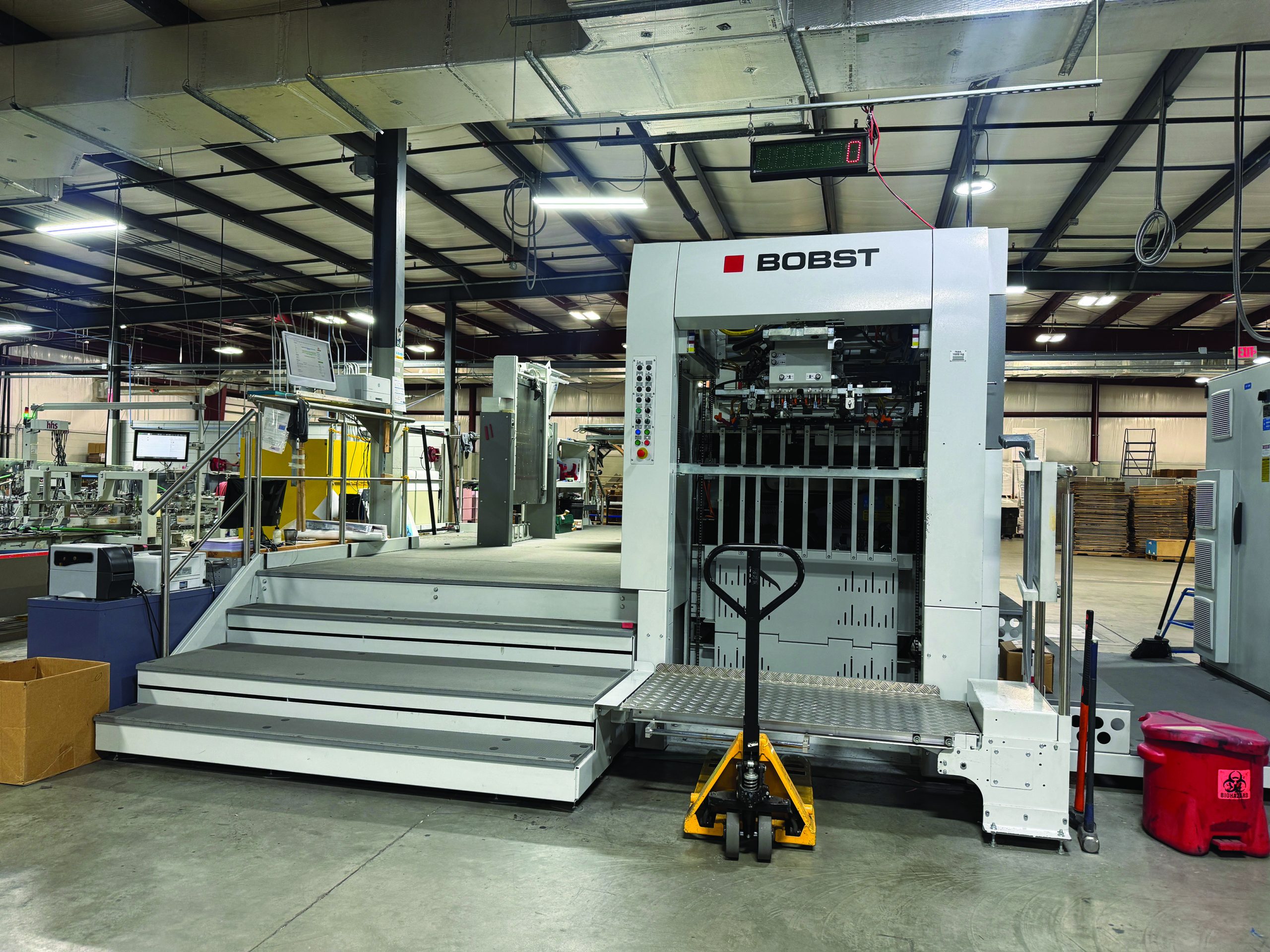
A Bobst diecutter supports SPC’s workflow as it expands its folding carton capabilities further. | Credit: PRINTING United Alliance
For most attendees focused on packaging, the best approach is to be honest with exhibitors about where they are on their packaging journey. The good news for those just getting started is that there is ample equipment that serves as an ideal entry point.
While Spectrum Packaging made a complete shift into packaging, Ryan Hartlief, its senior packaging specialist and national accounts manager, shared at the 2025 Packaging Forum that there is plenty of opportunity for packaging newcomers to start small.
“If you’re easing into it and you want to offer some different things, there’s a lot of room in that smaller space,” he said. “... You’re not going to use a million-and-a-half-dollar folder/gluer system. You’re going to do something that’s much more economical, that’s focused on shorter runs.”
Cory Francer is Content Director for Packaging Impressions. Before that, he was an Analyst with Alliance Insights, where he led the team’s coverage of the dynamic and growing packaging market. With a decade of experience as a professional journalist and editor, Cory brings an eye for storytelling to his packaging research, providing compelling insight into the industry's most pressing business issues. He is an active participant in many of the industry's associations and has played an essential role in the development of the annual Digital Packaging Summit. Cory can be reached at cfrancer@napco.com
 Sponsor Content
Tecnau to Showcase Automation at the Expo
Sponsor Content
Tecnau to Showcase Automation at the Expo
 Dave Leskusky Leaves Big Footprints After 31 Years
 How Sheet For Brains is Addressing Mental Health in The Printing Industry
 Expo Bound: Expanding Knowledge Across the Board
 The Week that Was (9/7/26)
 PRINTING United Expo Brings the Industry Together
