


The Power of Diversification: 4 Printers Who Did It Right
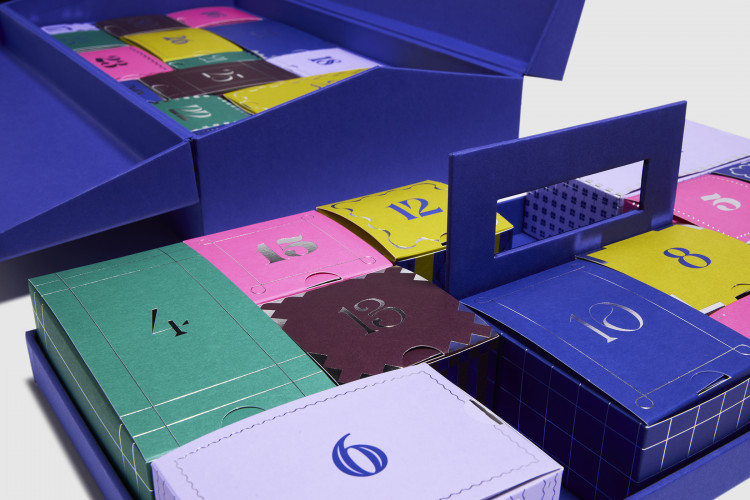
According to the “Commercial Printing Report Fall 2025,” conducted by PRINTING United Alliance and sponsored by Canon U.S.A., 77.1% of commercial printers have diversified beyond their core business to meet market demands, increase client retention, and add new revenue streams. Many have moved into wide-format production, packaging, promotional products, and apparel decoration.
There’s no one-size-fits-all approach to expansion, but ‘smart diversification’ means strengthening the core business without diluting it. Here’s how Color Ink, Premier Press, Quad, and Wallace Graphics found success.
Success Stories
Color Ink’s Diversification Win
With roots in commercial printing, Sussex, Wisconsin-based Color Ink saw huge potential in packaging.
“About 10 years ago, we started doing short runs of folding cartons for packaging design firms that needed them for customers that were launching new products or campaigns,” Todd Meissner, the company’s president, shares. “We knew we were never going to get the production runs, but we already had the right equipment and workflows to produce the prototype runs.”
Not long after, Color Ink began collaborating with design studios and advertising agencies on promotional marketing and influencer kits. The secret to the success? Short runs packed with added value — from diecutting and embellishments to hand assembly. “We were drawn to pursue more of this work because of the higher gross margin,” Meissner adds.
Involving staff in diversification decisions is a top priority, especially when it comes to equipment investments. Production managers and press operators are the ones with hands and eyes on the job, so including them in the expansion process is key. “We place an emphasis on rewarding staff that are willing to learn new skills and take on additional responsibilities,” he explains.
Beyond its internal staff, Color Ink has leaned on its vendor partners to provide the training and resources it needed to grow and expand.

In the past 10 years, Color Ink enhanced its structural design capabilities, upgraded diecutting and converting equipment, and added digital embellishments. | Credit: Color Ink
One of its biggest wins? Two of its largest customers found them through word-of-mouth. “We are seeing more new customers who find us because they have heard about our unique capabilities,” Meissner says.
While Color Ink’s success story sounds like smooth sailing, Meissner says it required a serious shift. “Commercial print and packaging are two very different industries,” he explains. “We had to get ourselves in a manufacturing mindset when we transitioned to folding cartons. Packaging clients want to see quality systems put in place as well as chain of custody, and lot tracing throughout the manufacturing process.”
It’s not just as simple as buying the equipment or adding a capability and work will come. “The margins can be very good; however, folding cartons is still a competitive market,” he says. “Hire key salespeople or management that have experience selling in that space to help educate and put your company in front of the right customers.”
Color Ink’s success proves that smart diversification takes strategic planning, hiring the right expertise, and a willingness to shift mindsets. That approach continues to pay off, strengthening the company’s core identity.
Premier Press’ Natural Progression
For Portland, Oregon-based Premier Press, diversification was about progression, according to Laura Mazy, director of marketing. She credits the company’s success to its “strong client-first culture” based in spotting opportunities to better serve its clients.
“Every new product we’ve brought to market — branded merchandise, custom apparel, influencer kits, environments — was created to make our clients’ jobs easier by providing full-circle services and eliminating the need to juggle multiple vendors,” Mazy explains. “With clients of 25-plus years, it was in our core to adapt to their evolving needs. We’re in the brand business. And that mindset shapes every move we make.”
Premier Press first started producing seeding kits in 2015. Today, that is one of its core specialties with the rise of “unboxing trends” on social media, Mazy notes. “To support this work, we built an in-house creative team that develops brand-right concepts from the ground up.”
In addition to premium packaging, it’s also branched out into branded merchandise. “From concept to production, we combine strategic design with precision manufacturing to create packaging and merchandise that not only protect the product, but also tell the brand’s story,” Mazy adds.
Nearly all the magic happens at Premier Press. “With more than 200 specialists under one roof, we can concept, prototype, produce, pack, and deliver entirely in-house,” she says. “We even operate our own trucks to get campaigns into market faster.”
That means greater control, stronger cohesion, and fewer moving parts. “That’s the difference between managing vendors and working with one true partner,” she says.
Premier’s diversification approach is rooted in strategy-first thinking, the right people, training and upskilling, and workflow innovation. Each new capability solves a client challenge and is supported by subject matter experts. Not to mention, it keeps its team equipped with the right tools and knowledge to work across disciplines.
While Premier Press anticipated the operational side of diversification, Mazy says the amount of storytelling to shift perceptions was a surprise. “Even with expanded capabilities, many still saw us as ‘just a printer,’” she shares. “Changing that narrative meant reframing the conversation around goals and results. That mindset shift has become one of our greatest strengths, helping us show up not just as makers but as strategic creative partners.”
Her best piece of advice: Don’t do it just to do it or “look bigger.” Do it to make the work you do “more cohesive.” The best way to do that is to let clients lead the way.
“Let client challenges guide your roadmap, build processes that can scale, and keep asking ‘why’ before you add ‘what,’” Mazy advises. “Success requires more than equipment — it takes a house full of subject-matter experts and a willingness to invest in them, knowing returns aren’t immediate. We’ve seen the value of bringing in industry talent through hiring and acquisitions, shortening the learning curve, and deepening our expertise. When expansion aligns with your core purpose, it doesn’t just grow your offerings. It grows your impact.”
Quad’s Evolution of Services
Quad, based in Sussex, Wisconsin, first expanded into in-store solutions in 2010, followed by packaging in 2013. This allowed the company to apply its print expertise to more brand touch points, according to Oliver Kimberley, general manager of managed services.
In 2025, Quad entered the $27 billion promotional products industry after clients requested branded merchandise. “We saw branded solutions as further physical extensions of a brand’s story,” Kimberley adds. “Recent research we conducted with The Harris Poll indicates that 81% of consumers notice when a brand goes the extra mile with their physical experience — and branded goods provide that.”
Kimberley says this expansion was a natural next step, and it distinguishes Quad in a sea of print, promo, and creative providers.

Earlier this year, Quad entered the $27 billion promotional products industry after clients requested branded merchandise. | Credit: Quad
“We can handle concepting and design, and even provide custom packaging, custom flyer inserts, custom thank-you notes, and custom boxes alongside the promotional items themselves,” he explains. “This integrated approach is something unique that Quad brings to the market.”
Leveraging Quad’s ordering technology, global network of vendors, warehousing, and logistics capabilities fosters loyalty and connection. “Making this process as seamless as possible is always top of mind,” Kimberley says.
To diversify smartly, Quad recruited experienced leaders in branded merchandise. “We also joined trade associations to tap into existing supply chains and white-label goods,” he continues. “We’re listening to our clients to understand their needs and matching them with appropriate solutions.”
Offering advice, Kimberley tells PSPs to listen to client asks. What challenges do they have? How can you solve them? From there, it’s all about strategy and action, which requires systems and the right people. Within that: What’s your differentiator?
“Leverage your existing strengths and figure out how those assets set you apart in your new market,” he advises. “Diversification should strengthen your core offering, not distract from it. In Quad’s case, both packaging and branded goods offer marketers ways to extend their brands beyond traditional tactics. They make our print relationships deeper and stickier. Don’t lose focus on the successful business you already run.”
Wallace Graphics Welcomes Efficiency
At Wallace Graphics in Duluth, Georgia, the expansion into apparel and promotional products met a growing demand from its customers.
“Many of our clients were already sourcing apparel and promo products separately,” Jake Wallace, executive vice president, explains. “By expanding into this space, we could offer a seamless, one-stop solution for print, promo, and apparel under one roof. It aligned perfectly with our customer-centric approach and allowed us to strengthen partnerships by being a true brand steward.”
Through its strategic acquisition of The Corporate Shop, Wallace Graphics entered the promotional and apparel space. “This acquisition allowed us to retain the majority of their experienced staff, bringing valuable expertise in-house and ensuring a smooth, seamless integration between the two companies,” he says. “It created immediate continuity for customers and positioned us to scale the division without disruption.”
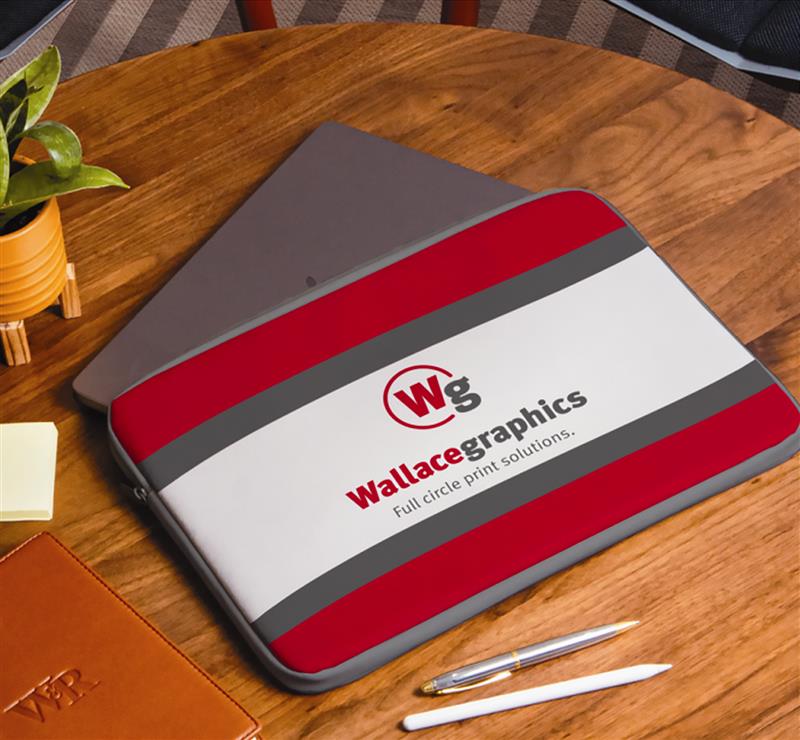
By expanding, Wallace Graphics is a one-stop shop for customers’ print, promo, and apparel needs. | Credit: Wallace Graphics
What’s been the biggest game changer? Launching full-service, branded company stores for several of its clients. These stores allow organizations to manage employee apparel, promotional products and gifts, and print materials in a single platform.
“We handle warehousing, fulfillment, and customer service, which has made the process turnkey for our clients,” Wallace explains. “It’s helped us win new business and deepen relationships with existing accounts.”
Alongside the wins came learning opportunities. Wallace Graphics initially underestimated the intricacies and complexities of inventory management and forecasting. “We’ve since implemented better reporting tools and systems to streamline this and offer more proactive inventory support to our clients,” Wallace says.
Having worked through the kinks, Wallace has advice for other printers: “Don’t treat promo and apparel as an add-on — it requires the same level of strategy, staffing, and attention to detail as your core business. Start by identifying customer pain points and build your offering around solving those. Surround yourself with partners you trust, and invest in the infrastructure to do it right. When executed well, it not only drives new revenue, but strengthens your position as a full-service partner.”
It’s clear: Diversification works best when rooted in strategy and backed by client needs. When printers embrace new markets while staying true to their core competencies, the result isn’t just growth, it’s long-term relevance and deepened client relationships in a changing industry.
 Numo Manufacturing on Visualizing Promotional Products Production
 Multi-Color Corp. Announces Restructuring
 Alliance Insights Shares Printing Industry Trends
 Fiserv on Trends in the Transactional Space
 Gina Danner Built Power in Print by Refusing to Be Invisible
 Crawford Technologies Marks 30 Years of Innovation
