


How Printers Can Grow Their Business with Branded Merchandise

The following article was originally published by Wide-format Impressions. To read more of their content, subscribe to their newsletter, Wide-Format Impressions.
Setting the tone for a dynamic exploration of how print businesses can diversify and grow through promotional products. Joan Miracle, Executive Director of Corporate Accounts at Advertising Specialty Institute (ASI), warmly welcomed attendees to her session, Promo from the Ground Up: How to Grow Your Business Selling Branded Merch, which was presented during the 2025 PRINTING United Expo.
Miracle, who has spent over 16 years helping companies build successful promo divisions, has seen firsthand how adding branded merchandise can transform a traditional print operation. “It’s a really easy transition or addition to your business,” she said. “I absolutely love helping people get started. It’s my passion.”
The Scope of the Industry
Miracle began the presentation by laying out the size and opportunity of the promotional products market. “In 2024, industry sales reached $26.6 billion,” she noted. “That’s a massive number—and a massive opportunity for printers looking to expand.”
Although sales dipped during the pandemic, the sector has bounced back stronger than ever. “We just released Q3 sales figures for this year,” she said, “and we’ve had one of the largest gains in the last few years.”
Who Buys Promotional Products?
Miracle emphasized that promotional merchandise has a remarkably broad customer base. “The education market has been the number one buyer for at least eight years,” she explained. “The only time that changed was in 2020, when healthcare temporarily took the lead.”
Other key sectors include construction, finance, nonprofits, manufacturing, restaurants, and travel. “Chances are, some of your existing print clients are already in the top 10 markets for promo,” she added. “That’s why this is such a natural fit for printers.”
Top-Selling Products
If you’re wondering what to sell first, Miracle had the data: “T-shirts are number one, representing 16% of all sales,” she said. “Then it’s drinkware, polo shirts, caps and headwear, then bags.”
Her advice? Start simple. “One of my multimillion-dollar distributor companies sells 80% bags,” she said. “You don’t have to worry about their sizes, they’re easy to source, and customers love them.”
Writing instruments, she added, are another natural entry point. “Pens are the gateway to promotional products.”
With over 1.2 million promotional items available, the possibilities are nearly endless. Apparel, tech accessories, awards, safety gear, branded gifts, and more. “You can sell them all,” Miracle emphasized. “You don’t need specialized equipment to get started.”
The Numbers That Matter
The average promotional order, she shared, is about $1,322, but Miracle has seen orders skyrocket far beyond that. “One of my customers gave a client a little phone charger as a gift,” she recalled. “That client ended up selling $77,000 worth of those chargers. One small product turned into a huge opportunity.”
Profit margins average around 37%, she said, but apparel often brings margins closer to 50%. “And remember, you can sell promo to the same customers you’re already printing for.”
Why You Should Sell Promo
Beyond the financial upside, Miracle emphasized the strategic value of promo. “Adding promotional products makes you more valuable to your clients,” she said. “Don’t give them a reason to go elsewhere.”
She noted that many distributors who sell products out of their homes are now adding print. “If you keep saying no to promo,” she cautioned, “you might be sending your print customers straight to your competitors.”
Offering both print and promo creates a “one-stop shop” experience that deepens client relationships, increases profit per customer, and strengthens long-term loyalty.
Getting Started: Start Small, Think Smart
For promo newcomers, Miracle offered four clear, practical steps.
Start with a self-promo item.
“Buy a promotional product for yourself,” she said. “Use it to advertise that you now sell promo. It’s the best way to learn the process safely.”
Begin with hard goods.
“Pens, mugs, and tech accessories are easier to manage than apparel,” she advised. “Apparel involves sizes, decoration types, and more logistics.”
Don’t buy equipment or inventory.
“You don’t need to print or store anything,” she said firmly. “Suppliers will imprint products for you. You can sell millions without ever owning a press.”
Leverage partnerships.
Miracle pointed to ASI’s technology and education tools: “We’ve been doing this for 70 years,” she said. “We have learning resources, marketing kits, product search tools—everything to make your launch successful.”
Promote the Fact That You Sell Promo
“Don’t keep it a secret!” Miracle urged. She encouraged attendees to update all business materials, including websites, invoices, social media, and even voicemails—to mention promotional products.
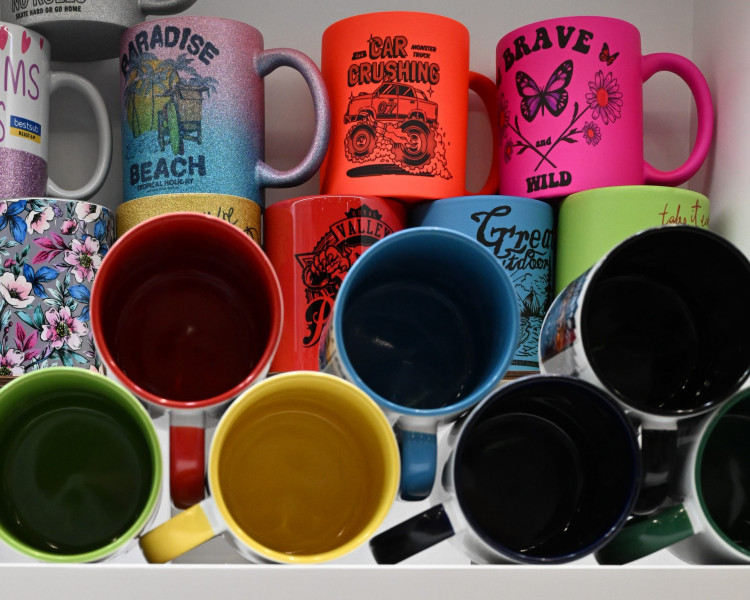
And most importantly: share and display samples. “Samples sell promotional products,” she said. “Set up a display in your office, even if it’s just a small shelf. Rotate products by season so customers always see something new.”
Self-Promos That Work
The best distributors, Miracle said, always have self-promotional campaigns running. “Don’t give away closeouts or junk,” she cautioned. “Give away something high-quality that you’d be proud to sell.”
One of her own favorites? A branded journal. “I’ve had three distributors call me this year asking where to buy a specific journal because their customers wanted it after seeing it.”
Functional, attractive items like journals, tech accessories, or premium drinkware—make powerful, lasting impressions. “It shows you believe in the power of promo,” she said.
Success Story: Spencer Coleman
Miracle shared one of her favorite client stories. Spencer Coleman, a print and sign shop owner, who turned promotional products into a major profit center.
Coleman, she shared, started by simply displaying promo samples in his showroom. “One day, a print customer came in, saw a display of imprinted golf balls, and said, ‘Wait—you sell these?’” Miracle recounted. That conversation led to an unexpected $65,000 in new orders over several weeks.
Coleman’s strategy, she said, grew into a team-wide effort. Each month, he chose three promotional products—like a journal, a pen, and a tumbler—and had his staff add them to every print quote. “He turned it into a game with sales contests and prizes,” said Miracle. “It’s now a major part of his revenue.”
Trending Products: What’s Hot Now
The promo market moves fast, and Miracle highlighted several current trends:
- Tech products with sleek designs and “find-all” technology, like smart luggage tags and phone accessories.
- Sustainable products made from recycled or eco-friendly materials. “Sustainability isn’t a trend—it’s here to stay,” she said.
- High-end gifts such as branded whiskey decanter sets or custom footwear. “You’ll do the same amount of work selling 50 pens as selling 50 decanter sets—but you’ll make far more profit,” she noted.
Tools and Technology
Finally, Miracle showcased ASI’s ESP platform, the premier search and sales tool for promo distributors. “ESP lets you search 1.2 million products, compare prices, see supplier ratings, and even use AI to generate ideas instantly,” she said. “You can create interactive client presentations, websites, and even company stores in minutes.”
Miracle emphasized that technology is the key to scaling efficiently. “You don’t have to know every product inside out. The tools—and the suppliers—are your experts.”
The Big Picture
Miracle concluded with an encouraging reminder. “Printers already have a competitive advantage,” she said. “You know branding. You know deadlines. You know quality. You just need to start offering the products your clients already want.”
Dan Marx, Content Director for Wide-Format Impressions, holds extensive knowledge of the graphic communications industry, resulting from his more than three decades working closely with business owners, equipment and materials developers, and thought leaders.
 Sarah Smith of Dynamic Print Discusses Reinvention
 drupa Unveils New Knowledge Platform
 Family, Innovation, and the Future of Packaging
: Insights from the Kaneff Family
Family, Innovation, and the Future of Packaging
Family, Innovation, and the Future of Packaging: Insights from the Kaneff Family
 Why 2026 is the Year of Intelligent Operations
 Women in Flexible Packaging Share Insights
