


Digital printing technology is a rising star in the printing industry, and the benefits it brings to print service providers (PSPs) means it often steals the limelight from traditional technologies.
However, print production has continued to demand a varied cast. For instance, offset equipment still has a role to play in print — and that doesn’t seem to be changing any time soon.
“I think offset presses get a bad rap in the industry, and probably because of marketing or just word of mouth,” Jonathan Wallace, president of Wallace Graphics, says. “But from a quality standpoint, from a speed standpoint, the newer offset presses and that technology — I mean … when you're talking to the inkjet guys, they're referring to offset presses where the makereadies are 45 minutes and 700 sheets, and the technology is just so much better. If it's five minutes and 100 sheets of makeready, it produces a lot better than the critics would make you think.”
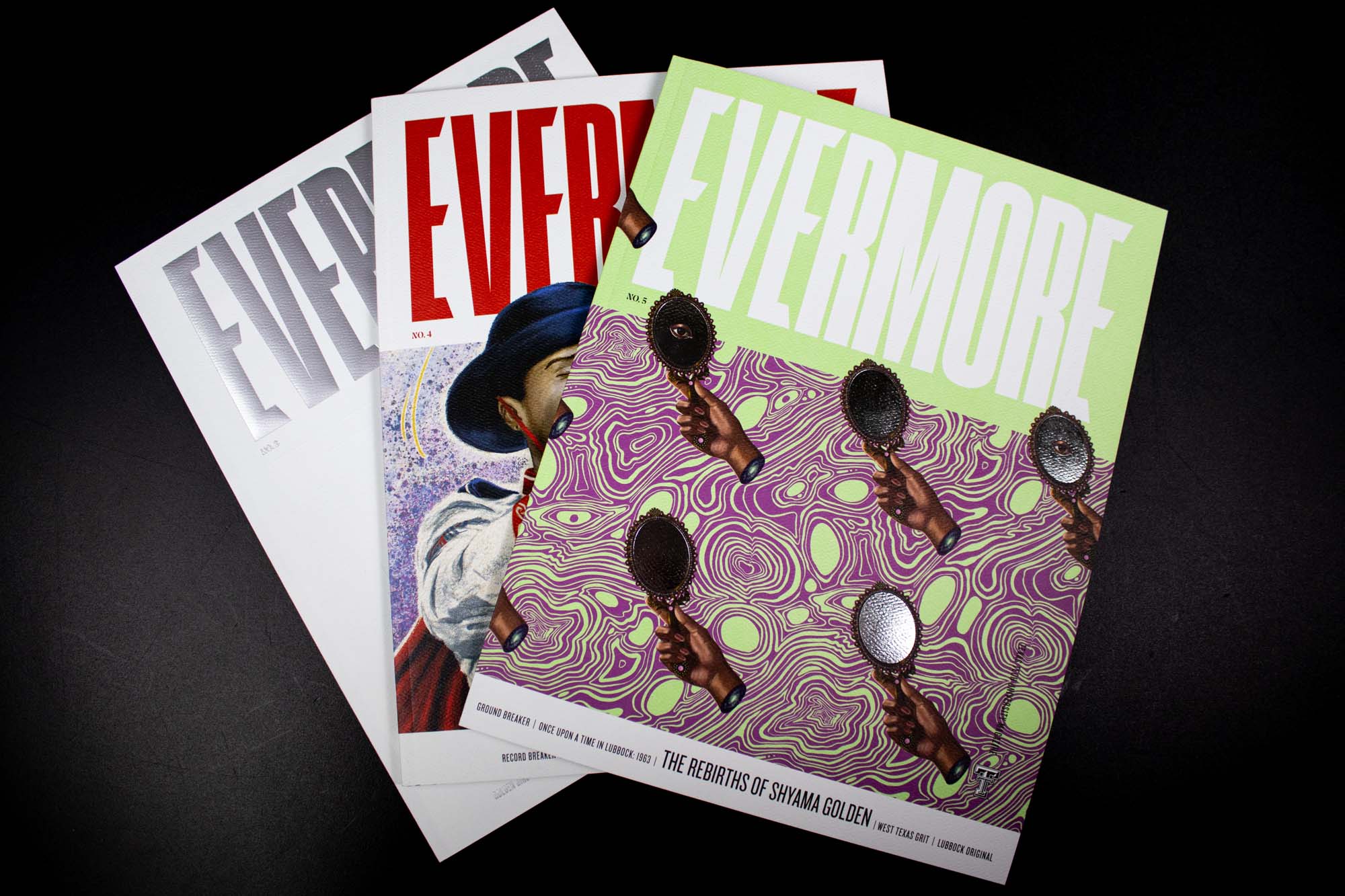
Replacing Offset With Offset
For the most part, companies investing in offset now are replacing older offset equipment, and that’s the case at Slate Group. The Lubbock, Texas, shop does 60% of its sales in offset, supported by a trio of Komori presses: two GL540 LED presses with coaters and a GL840P LED advance perfector.
In June, the PSP swapped one of the 540s for an additional eight-color perfector.
“The 540 LED has been tremendous," Don Denny, owner and president of Slate Group, says. "That was our first 540 and it got us into the 540 market. Well, after much success with the LED and the 540, we got that eight-color, just saw how productive and how efficient it was versus running it through the press, turning it over, taking it back through and running it through the press again, where we could achieve double-sided printing all at once. So, for the efficiency and maxing out our capacity, we had to increase our capabilities, and an eight-color Komori was a perfect fit for that.”
The perfector is ideal for all the work Slate Group does with publications and catalogs, Denny explains. The biggest advantage with continuing to invest in offset equipment is the added efficiency, which is driven in part by LED curing — something Denny calls a “100% game changer.”
“Honestly, that's been part of our growth and part of our success is the turn times,” he explains. “True, most older print shops [say], ‘Hey, get it in, we'll get it out of here in seven to 10 days, maybe two weeks,’ and we're half of that time. In 2026, people want it now, right? They want it quick.”
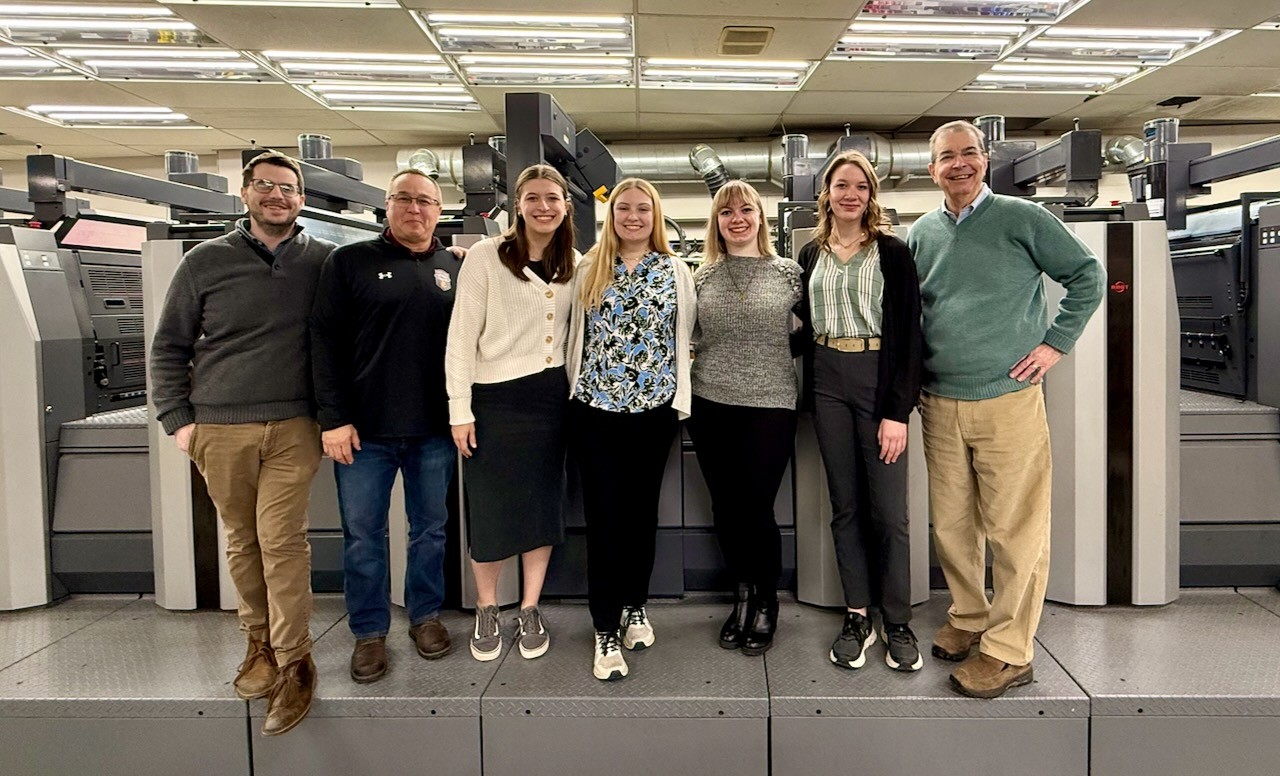
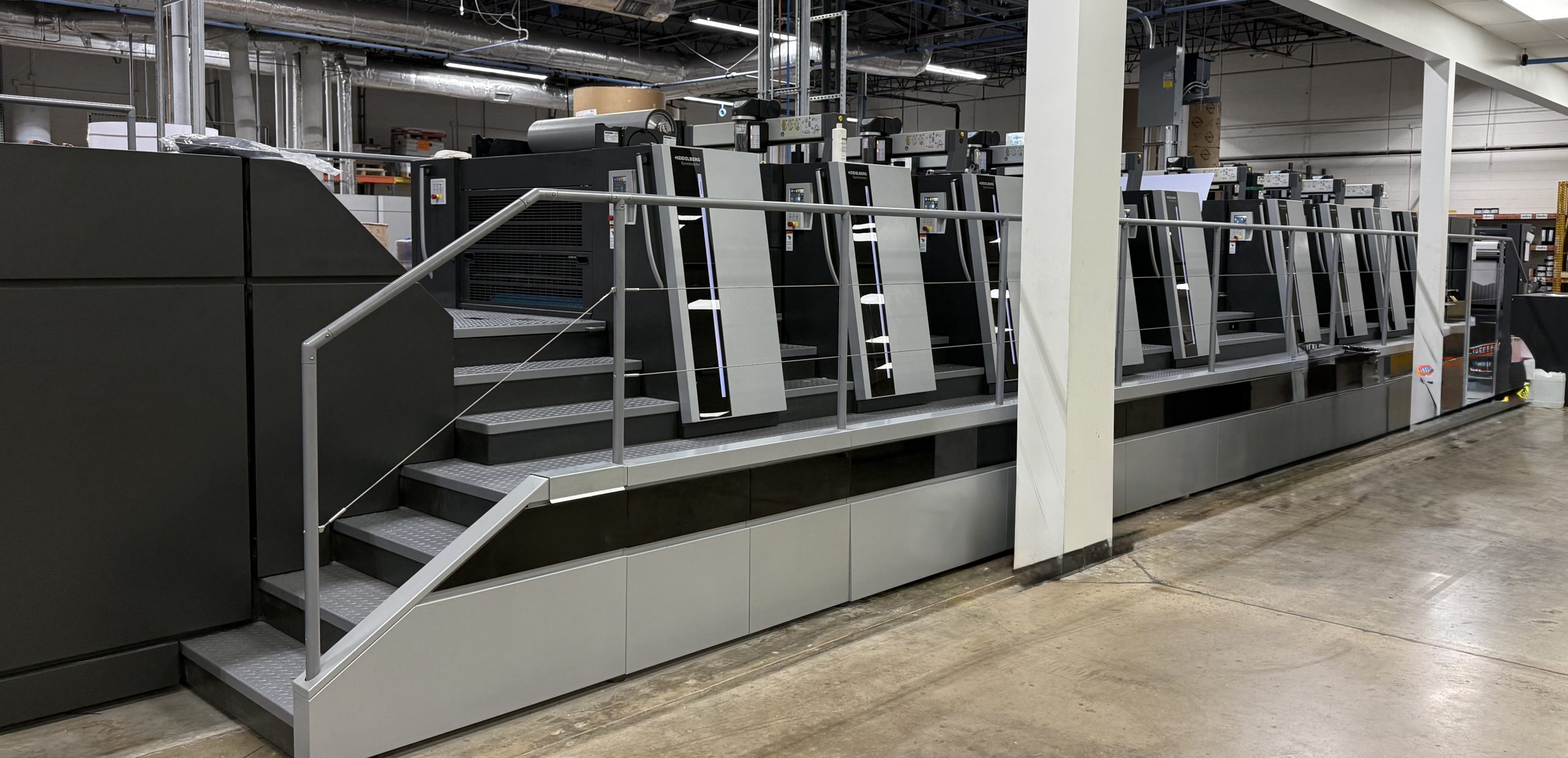
Wallace Graphics, a PRINTING United Alliance member based in Duluth, Georgia, has a similar story. The PSP installed a Heidelberg Speedmaster XL 106-8-P+L at the end of 2025, replacing two five-color Heidelberg presses that were installed in 2015 and 2019. The new Speedmaster is now the only offset machine the shop has.
“When we're looking at a new investment, we want to be able to run our existing work more efficiently, but also expand the type of work we can do,” Jake Wallace, vice president and owner, says. “So, it can do all of the work we were doing previously faster, more efficiently, but it also opens up some new avenues for thinner stocks. It can run 27-lb. uncoated text, which is thinner than what we could run on our previous offset presses. But it's also a UV press, so it opens up for synthetic — so your styrene, static clings, more of the POP type of work.”
Over in Detroit, Inland Press, a PRINTING United Alliance member, replaced an even older offset press — one from 1997 — with an RMGT 970 eight-color perfector in 2023. The company’s president and CEO, Brad Thompson, says that having the newer press has enabled a more efficient operation, which is something they use as a selling point to customers.
“The press uses much less electricity … because of the UV-LED dryers; energy is much less,” Thompson says. “So, we're going to some of our clients and our potential clients and saying, ‘The environmental footprint on this press is about half of what we would have had if we put in a more traditional-type drying system, etc., etc.’ And because it's one pass-through, you're not spending as much time on press, so there's less environmental impact also.”
Thompson lists a whole slew of other benefits the team has seen with an updated offset machine on the floor, including a camera system to support faster, more accurate makereadies and the ability to run the press with just one person. Plus, the efficiency of the newer press even enables them to pursue new customers, even during the busy political campaign season, he says.
How Offset Fares in the Face of New Tech
While offset remains an important facet of the production floor, it’s more common than not that PSPs also have newer technologies in their facilities. Over in Detroit, Inland Press has several digital toner devices, and Thompson says the team is investigating adding inkjet as well. Wallace Graphics and Slate Group also have digital presses running alongside offset equipment.
So why do PSPs continue to invest in both? Because there are just some things digital presses can do that offset can’t.
“You have customers that want a 4,000-magazine drive, but then that same customer might have a book that they only want a couple hundred of,” Denny says. “Before, we were like, ‘No, we can't do 200.’”
Digital tech makes it possible.
However, it doesn’t make sense to go all digital, either. In the eyes of Jonathan Wallace, cost is a huge factor in deciding which jobs should go on which printers.
“As we started to quote different items on the inkjet press, there's a clear distinction about which one fits best where,” he explains. “And so if it's publications, if it's full-coverage catalogs, postcards, it is cheaper and faster to print on the offset press. And when we move into finishing, there's some different layers there. But … the cost per sheet to get through the press or the inkjet, there is a distinct difference where it’s a lot more efficient on the offset press still, even at lower quantities.”
His brother Jake adds that having both technologies available can help the team manage the workload.
“We can produce a lot of the same work on either press, and so it allows for workload balance,” Jake Wallace says. “We don't necessarily have to go back to the customer with a new price, but we can give the customer a price and run it on the most efficient press for us, or use it to balance the work.”
Thompson adds that some jobs can even run on both offset and digital.
“We're doing a job with 1.7 million postcards that could be done inkjet, but it's actually going to be more economical because of ink prices and everything to do it on the eight-color press,” he says. “And then we're doing the mailing and just running it through inkjet addressing. But every shop is going to be different and every market is going to be different.”
Denny sums up the complementary benefits of digital and offset: “They just go hand in hand. If you don't have both, I don't know how you survive in this market.”
