A Wide-format SWOT for 2026

The following article was originally published by Wide-format Impressions. To read more of their content, subscribe to their newsletter, Wide-Format Impressions.
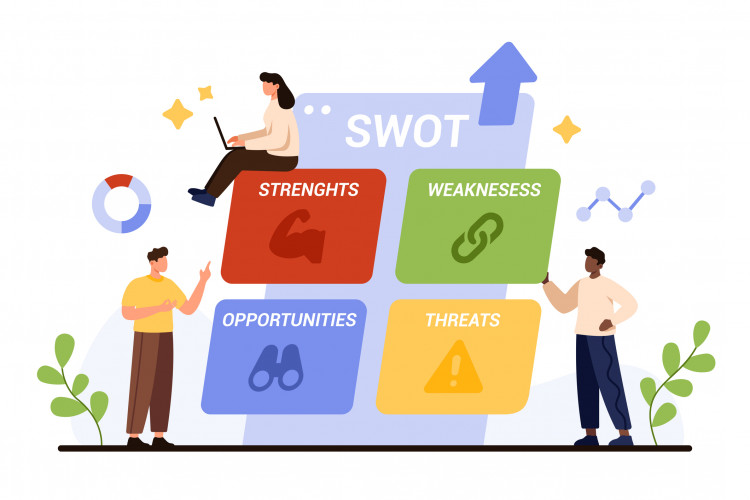
One of the most ubiquitous tools in the business world is the SWOT analysis — Strengths, Weaknesses, Opportunities, and Threats. It’s a quick way to break things down and have a clear idea of where the business is doing well — and where there might be room for improvement.
As 2026 gets into full swing and wide-format producers start planning for how to grow in the coming months, we asked several owners all in different phases of their wide-format journey — and in different regions of the U.S. — to SWOT the wide-format segment .
Our panel:
- Brian Adam, president of Olympus Group, headquartered in Milwaukee, Wisconsin
- Crystal Savage, vice president of Alliance Reprographics in Houston, Texas
- Brian Hite, principal and co-founder of Image Options in Foothills Ranch, California.
Strengths
BA: The wide-format industry is stable-to-growing, supported by ongoing demand in retail, events, sports, out-of-home, and branded environments. Compared with many other print segments, margins have historically been stronger due to complexity, speed requirements, and the value of consistent execution — though margins are compressing quickly. Physical print remains a core part of how brands show up in the real world, and the best providers differentiate through quality, reliability, and the ability to deliver complete programs (print plus finishing plus kitting plus installation coordination) with fewer handoffs.
CS: One of the strongest attributes of the large-format printing and reprographics segment today is adaptability. Alliance Reprographics has intentionally diversified across product offerings and industries. This evolution has contributed to our strongest performance to date. Clients are increasingly seeking providers who can support a wide range of needs, from traditional reprographics to large-format graphics, signage, and installation. We have expanded our product offerings and invested in relationship-based sales, and we are seeing more consistent demand and deeper client engagement. Diversification across industries has reduced our reliance on any single market cycle, creating greater stability. Overall, our focus on expanded capabilities, client relationships, and solution-driven service is driving long-term growth.
BH: Within large-format, retail interiors, and experiential work, the strongest parts of the industry continue to be those supporting complex, execution-driven projects rather than purely transactional print. As programs become more integrated, combining print, fabrication, logistics, installation, and coordination, the value shifts toward firms more capable of managing complexity and delivering consistently. Physical environments remain an important element for brand presence, customer engagement, and experiential marketing. When executed well, these projects are difficult to replicate quickly and tend to reward experience, operational discipline, and cross-functional collaboration. The industry’s continued evolution beyond traditional print into broader spatial and experiential solutions has become a meaningful strength, particularly where clients seek accountability, reliability, and fewer handoffs across vendors.
Weaknesses
CS: An ongoing challenge is keeping pace with technology and AI adoption. As workflow and customer communication become more technology-driven, our team, with deep industry experience, faces a learning curve with newer tools. Without intentional investment in systems and training, efficiency gains can lag. Addressing these weaknesses requires discipline, flexibility, and a willingness to evolve business practices that were effective in the past but no longer support consistent growth.
BH: A persistent challenge across the industry is limited demand visibility. Projects are often approved late in the cycle, scoped conservatively, and are subject to change, placing pressure on forecasting, capacity planning, and sales pipelines. Workforce constraints are compounded by wide swings in demand. Large, unpredictable projects can temporarily strain limited teams, while inconsistent volumes make it difficult to staff permanently at higher levels. At the same time, experienced labor is increasingly difficult to replace, and onboarding timelines are longer than in prior years. This creates an imbalance where companies can feel undersized for periods of intense activity and oversized during slower periods. At the more commoditized end of the market, continued price competition compresses margins, limiting reinvestment in people, systems, and equipment. Together, these dynamics make it harder for some companies to sustain momentum and reinforce the need for disciplined operations and financial management.
BA: Convergence is accelerating. Larger brands, retailers, and agencies are bringing pieces of production in-house, and traditional “print-only” work is increasingly bundled into broader marketing services. At the same time, technology improvements are making print and finishing easier to produce and manage, lowering barriers to entry and expanding the competitive set. That combination can push work toward simpler, more transactional buying behaviors and intensify price pressure, especially when demand visibility is limited and schedules change late.
Opportunities
BH: Opportunities moving into 2026 are likely to favor companies that prioritize execution quality, operational efficiency, and alignment with client needs, rather than volume alone. Clients increasingly value partners who can simplify complex programs, anticipate challenges, and deliver reliably across multiple touchpoints. There is continued opportunity in branded environments, events, and retail programs where physical space supports storytelling, differentiation, and engagement. Internally, investments in process improvement, workflow integration, and productivity offer a meaningful upside, even in a cautious demand environment. The industry also appears positioned for selective collaboration and consolidation as firms reassess scale, specialization, and long-term sustainability.
BA: The market is growing, and 2026 is positioned to be a strong year as economic conditions improve and marketing activity rebounds in many categories. AI and automation are already helping teams do more with fewer resources, improving estimating, prepress, scheduling, and workflow accuracy while reducing cost and rework. Wide-format also benefits from diversity: the same core capabilities can serve many end markets and product types, creating opportunities to pivot toward the strongest verticals, expand higher-value offerings, and deepen relationships through program standardization and faster turnaround.
CS: Looking ahead to 2026, the segment's growth opportunity remains strong. Clients prefer fewer vendors and seek providers with a wide range of capabilities. Expanding across industries and services remains a growth strategy. Continued investment in technology, process improvement, and workforce development will allow Alliance Reprographics to take on more complex, higher-value work without sacrificing service quality. We have been in business for 20 years and, with three consecutive years of growth, it reinforces that sustainable success comes from balancing expansion with operational readiness and execution.
Threats
BA: Convergence and continued technology improvements will keep making “good enough” print easier to produce, increasing commoditization and intensifying competition from non-traditional entrants. Wide-format demand is closely tied to marketing budgets, and marketing spend is tied to economic confidence, so volatility and uncertainty can quickly impact order flow, utilization, and pricing. Adding to that pressure, consolidation and private equity-backed rollups are reshaping the competitive landscape, often using scale, aggressive pricing, and centralized procurement to win share and compress margins for everyone else.
CS: One of the more significant threats we’re monitoring is increased price-driven competition that puts downward pressure on the market. When providers compete primarily on price, it can shift client focus away from service, reliability, and turnaround time. We know we are not the cheapest option, and our value is intentionally built around customer service, speed, and consistency. The concern is not competition itself, but market erosion if pricing becomes the dominant differentiator. As clients become more cost-sensitive, particularly during periods of economic uncertainty, margins are squeezed across the segment, and service levels can suffer. That dynamic ultimately hurts both providers and customers. Our focus heading into 2026 is on pricing discipline, clear value communication, and partnering with clients who prioritize performance and dependability. Long-term growth depends on protecting the segment's overall health.
BH: The most significant risks heading into 2026 remain tied to uncertainty and volatility. Shifts in client confidence, delayed decision-making, and changing priorities can quickly affect project flow and utilization. It is difficult, at best, to navigate circumstances outside of a business’ control. Cost pressure from labor, compliance, and operational overhead continues to challenge margins, particularly for companies with limited flexibility. Commoditization remains a structural threat at the simpler end of the market, while client expectations around speed, precision, and accountability continue to rise. Together, these pressures increase downside risk when projects are under-scoped or misaligned, underscoring the need for discipline, adaptability, and a clear understanding of where each business can realistically compete and add value.
Toni McQuilken is the senior editor for the printing and packaging group.